
ELITE WATERSPORTS
Last updated 1-22-2026
What Cabrinha Kite Should I Buy?
Switchblade vs Nitro vs Drifter (Florida Guide)

What Cabrinha Kite Should I Buy
Everything You Need to Know Before You Pull the Trigger
If you're trying to figure out which Cabrinha kite you should buy, you're probably in one of two places.
If you're wondering which Cabrinha kite you should buy, the short answer is this:
• Switchblade is the best all-around freeride kite for most riders.
• Nitro is built for big air and aggressive looping.
• Drifter is designed for wave riding and strapless sessions.
• FX leans toward freestyle and unhooked performance.
• Contra remains the light wind specialist.
The right choice depends on your skill level, riding style, and the wind conditions you ride in most often.
Either you're brand new and overwhelmed.
Or you've been riding long enough to know that picking the wrong kite sets you back a season.
Both are valid.
Cabrinha doesn’t flood the market with endless models.
Their lineup is focused. Switchblade.
Nitro. Drifter. FX.
And then the legacy names like Contra and Moto that riders still talk about on the beach.
That tight lineup is good news. It means each kite has a clear job.
But here’s the problem.
Marketing makes everything sound like it does everything.
“Boosts huge.”
“Great drift.”
“Massive wind range.”
“Freeride performance.”
If every kite does everything… then why are there four of them?
Table Of Contents
- Why This Decision Actually Matters (Especially in Florida)
- The Most Common Mistake Riders Make
- Cabrinha’s Design Philosophy (Why the Lineup Is Structured This Way)
- The Cabrinha Switchblade
- The Cabrinha Nitro
- The Cabrinha Drifter
- The Cabrinha FX
- Older Cabrinha Models (Still Relevant)
- How to Choose the Right Cabrinha Kite for Florida
- Still Not Sure Which Cabrinha Kite Is Right for You?
- FAQ: Cabrinha Kites
- Final Summary
Why This Decision Actually Matters (Especially in Florida)
At Elite Watersports in St. Pete, we don’t just sell these kites. We ride them in the Tampa Bay wind and the Tampa Bay wind is not steady trade wind.
We get:
• 12–15 knot summer thermals
• 18–25 knot winter cold fronts
• Gust spreads that jump 8 knots in seconds
• Shallow flat water
• Chop stacked on tide
• Gulf swell on the right days

A Cabrinha kite that feels incredible in 20 knots of steady side-onshore trade wind can behave completely differently in gusty Florida winter conditions where the wind jumps from 18 to 26 knots in seconds.
Need help deciding?
If you want to talk through it after reading, call the shop at (727) 800-2202
Contact usThe Most Common Mistake Riders Make
Here’s something we see all the time in the shop.
A rider watches King of the Air highlights.
Sees someone looping a high-aspect kite at 40 feet.
Decides that’s what they need.
But they’re still working on:
• Staying upwind consistently
• Clean transitions
• Controlled first jumps
A specialty kite won’t accelerate progression if you’re not ready for it. We regularly get asked, “Is the Cabrinha Nitro good for beginners?” and the honest answer is no, not if you're still learning fundamentals.
It will slow you down.
The right kite for you should:
✔ Match your riding style
✔ Match your wind conditions
✔ Support your skill level
✔ Make sessions feel productive, not survival-based
That’s how you improve.
Cabrinha’s Design Philosophy (Why the Lineup Is Structured This Way)
Cabrinha typically organizes their kites into categories:
• Freeride
• Big Air
• Wave
• Freestyle
• Lightwind
Cabrinha designs each kite with a very specific performance bias.
The freeride kites prioritize stability and range.
The big air kites prioritize vertical lift and forward window position.
The wave kites prioritize drift and depower.
The freestyle models prioritize slack and direct pull.
Each kite is tuned for:
✔️ Aspect ratio
✔️ Bridle geometry
✔️ Strut count
✔️ Frame stiffness
✔️ Bar pressure
✔️ Window position
Those small design changes radically affect how a kite behaves in:
• Gusts
• Loops
• Down-the-line surf
• Unhooked pop
• Light wind relaunch

You feel that difference immediately once you know what to look for.
For example, a high-aspect kite like the Nitro sits further forward in the wind window. That increases jump height and upwind efficiency but reduces drift.
A lower-aspect design like the Drifter sacrifices vertical lift for tighter turning and smoother depower on a wave face.
The Cabrinha Switchblade
The Legacy All-Around Powerhouse
Is the Cabrinha Switchblade a Good All-Around Kite?
Yes. And it has been for over a decade.
The Switchblade is Cabrinha’s 5-strut freeride machine. It’s stable, powerful, and extremely composed in gusty wind. If you’ve ridden in Tampa Bay during a winter front, you know what gust spikes feel like. The Switchblade handles that better than most 3-strut freeride kites.
What are the Specs Profile for the Switchblade
• 5-strut frame for maximum canopy stability
• Medium-high aspect ratio for lift and upwind drive
• Moderate, predictable bar pressure
• Wide usable wind range
• Excellent relaunch characteristics
How does the Switchblade Ride?
• Boosts easily
• Predictable lift
• Long, floaty hangtime
• Strong sheet-and-go power
• Very stable overhead

The Switchblade doesn’t feel twitchy. It feels planted. That’s why schools and instructors have trusted it for years. Compared to the Cabrinha Moto, the Switchblade feels more locked-in and structured.
Compared to the Nitro, it feels less aggressive but more forgiving.
If your edge timing isn’t perfect, it still gives you lift. That matters for riders progressing through basic jumps and early loops.
Who Is the Switchblade For?
✔ Beginner to advanced freeriders
✔ Riders who want stability in gusty wind
✔ Anyone who prioritizes upwind and hangtime
✔ Riders who want one kite to do almost everything
If you’re still working on staying upwind, dialed waterstarts, and first jumps, this kite will help you more than a specialty big air kite.
⤷ If you're not sure what size makes sense, read:
How to Choose the Right Kite Size
The Cabrinha Nitro
Built for Big Air and Megaloops
Is the Cabrinha Nitro a True Big Air Kite?
Yes. This is Cabrinha’s dedicated high-aspect big air machine.
Where the Switchblade is balanced, the Nitro is aggressive. It’s designed for vertical lift, faster looping, and powered riding.
What are the Specs Profile for the Nitro?
• 5 struts
• High aspect ratio
• Faster turning than Switchblade
• Lighter bar feel
• Designed to be ridden powered
How does the Nitro Ride?
• Explosive lift
• More vertical send
• Faster loop radius
• Cleaner catch on committed loops
• Sits forward in the window
The Nitro rewards commitment.
If you edge hard and send properly, it gives you real height.
If you’re lazy with technique, it won’t bail you out the way the Switchblade does.
This is closer in category to kites like the North Orbit or CORE XR Pro. Riders coming from older Cabrinha Velocity models will find the Nitro carries that same high-aspect DNA but with faster turning and more modern loop recovery.

Who Is the Nitro For?
✔ Intermediate to advanced riders
✔ Big air progression riders
✔ Kiteloop progression
✔ Riders in strong consistent wind
If you’re chasing megaloops, this is your Cabrinha tool.
In Florida, we usually steer true beginners toward the Switchblade first. Big air kites shine when wind is consistent. Our winter frontal days are great for Nitro sessions, but they’re not every day.
⤷ If you’re learning loops, read: Learn to Kite Loop for Beginners
The Cabrinha Drifter
Wave and Strapless Specialist
Is the Cabrinha Drifter Good for Wave Riding?
Absolutely. This is one of Cabrinha’s most dialed designs.
The Drifter is built to:
• Drift down the line
• Depower smoothly
• Pivot quickly without surge
What are the Specs Profile for the Drifter
• 3 struts
• Medium aspect
• Light bar pressure
• Fast pivotal turning
• Excellent drift

How does the Drifter Ride?
When you ride toward the kite on a wave, it floats. It doesn’t stall and yank you off the face.
Depower is smooth. You can sheet out mid-bottom turn and it doesn’t surge.
Compared to the Switchblade, it feels lighter and looser.
Who Is the Drifter For?
✔ Strapless riders
✔ Surfboard riders
✔ Foil riders who want drift
✔ Onshore wave conditions
In St. Pete, we see Drifters on:
• Directional riders in Gulf swell
• Foilers who want smoother drift than high-aspect kites
⤷ If you’re launching in surf, read: Self Launch or Drift Launch?
The Cabrinha FX
Freestyle and C-Kite Feel
Is the Cabrinha FX a True Freestyle Kite?
The FX is Cabrinha’s freestyle-oriented crossover kite.
It blends elements of a classic C-kite with modern freeride usability.
It is not a pure 5-line competition C-kite, but it moves clearly in that direction with more explosive power and better slack than freeride models.
This makes it one of the closest things in the Cabrinha lineup to a freestyle / wakestyle kite.
What are the Specs Profile for the FX?
• 3-strut hybrid C-shape
• Direct steering response
• Fast pivot and quick loops
• Slack-oriented tuning for unhooked riding
The FX is designed to sit slightly deeper in the window than freeride kites, allowing riders to load the lines and release power for tricks.


How does the FX ride?
• More explosive pull
• More direct bar feedback
• Better slack for unhooked tricks
• Faster and more reactive than the Switchblade
This is a performance-focused kite designed for powered riding, not relaxed cruising.
Who Is the FX For?
✔ Riders progressing into freestyle and powered tricks
✔ Riders who want a more aggressive, reactive kite
✔ Intermediate to advanced riders
It is not ideal for beginners.
If you’re still learning basic jumps transitions, and riding upwind consistently, the Switchblade or Moto X will feel much more forgiving.
Older Cabrinha Models (Still Relevant)
Cabrinha Contra
Lightwind King
The Contra is Cabrinha’s dedicated lightwind platform.
• Designed for 10–14 knot days
• Excellent low-end grunt
• Stable canopy
• Great for heavier riders
In Florida, 12-knot thermal days are common. Contra extends your session window.
If you ride hydrofoil in light wind, you might also consider lighter 3-strut options.
⤷ For wind forecasting help: How to Read a Wind Forecast

Cabrinha Velocity
Old-School High Aspect Big Air
The Velocity was Cabrinha’s previous high-aspect boosting kite.
Nitro has essentially taken over this role in modern lineup.

Cabrinha Moto
Freeride Crossover
The Moto sits between Switchblade and Drifter.
• 3 strut
• Lighter feel
• More playful
• Faster turning
It’s more nimble than Switchblade, but less wave-focused than Drifter.
Many Florida riders loved the Moto for lighter wind freeride sessions.

How to Choose the Right Cabrinha Kite for Florida
Let’s Simplify This.
If you’ve read this far, you probably already have a gut feeling about which direction you’re leaning.
But let’s slow it down and make this practical.
Because the right kite for your sessions in St. Pete is not always the kite that looks the coolest online.
If You’re a Beginner in St. Pete
Start with the Switchblade.
And I don’t say that because it’s the “safe” option. I say it because it actually accelerates progression.
When you’re learning, your brain is already overloaded.
You’re thinking about:
• Board position
• Bar position
• Where your kite is
• Where other riders are
• Staying upwind
• Not crashing
The last thing you need is a kite that’s twitchy, hyper-responsive, or punishing.
The Switchblade gives you:
✔ Stability when the wind spikes
✔ Predictable lift when you try your first jumps
✔ Easier relaunch when you make mistakes
✔ Enough wind range to survive Florida gusts
In Tampa Bay, especially in winter, the wind isn’t perfectly steady. A forgiving kite lets you focus on skills instead of constantly correcting power spikes.
If you’re still working on clean waterstarts and staying upwind, the Switchblade is going to help you more than any specialty kite ever will.
And yes, book lessons. Even one or two follow-up sessions with jet ski support will fast-track your progression dramatically.

If You Want to Boost Higher
Now we’re talking about a different rider.
If you’re consistently staying upwind, landing clean jumps, and starting to feel comfortable edging hard, then you’re probably wondering how to go higher.
That’s where the Nitro makes sense.
The Nitro is not subtle.
It’s built to:
• Climb vertically
• Sit forward in the window
• Loop faster
• Reward commitment
But here’s the key word: commitment.
If you ride powered, edge hard, and send properly, the Nitro gives you lift that feels more vertical and more aggressive than the Switchblade.
If you’re casual with your edge timing, it won’t bail you out.
That’s the tradeoff.
In Florida, our true big air days usually come during winter fronts. When it’s 20–25 knots and clean enough to edge hard, the Nitro really shines.
If you’re chasing megaloops, this is your tool.
If you’re still working on clean transitions? Stay on Switchblade a bit longer.
If You Ride Waves or Strapless
This is where people get it wrong a lot.
If your board of choice is a surfboard, and you care more about carving than boosting, the Drifter is the smarter move.
The Drifter:
• Pivots tight
• Depowers smoothly
• Stays in the sky when lines slack
When you’re riding down the line in Gulf swell, the last thing you want is a kite that keeps surging forward and pulling you off the face.
You want something that drifts.
In onshore conditions, which we get often, drift is everything.
You sheet out, carve, and the kite just floats.
That’s what the Drifter does well. Compared to the Switchblade, the Drifter sacrifices maximum boost for better down-the-line control and lighter bar feel.
We see a lot of St. Pete riders pair the Drifter with directional boards for small swell days or strapless freestyle sessions.
If boosting is secondary and carving is primary, this is your call.

If You Ride in 10–14 Knots Often
Be honest with yourself.
How many of your sessions are actually 20+ knots?
In Florida, we get a lot of 12–15 knot days. Especially in summer.
If you’re tired of standing on the beach waiting for wind to build, the Contra changes that equation.
The Contra gives you:
• More low-end power
• Earlier planing
• Better session consistency
• Especially if you’re a heavier rider or riding twin-tip.
Could you ride a Switchblade in 14 knots? Sure.
Will the Contra feel more efficient and powerful? Absolutely.
If your reality is marginal wind more often than nuking wind, it’s worth considering.
If You’re Trying to Go Unhooked
Now we’re entering a different lane entirely.
If you’re starting to:
• Practice handle passes
• Focus on pop
• Want slack in the lines
• Commit to freestyle progression
Then the FX becomes relevant.
But this is important.
Freestyle-oriented kites require stronger fundamentals.
You need:
• Edge control
• Timing
• Comfort riding powered
The Unify is more direct, more aggressive. less forgiving.
It’s not the kite you cruise around on casually.
If you're primarily riding hooked-in freeride sessions, the Switchblade will feel more stable and easier to manage.
If you’re still dialing basic hooked-in jumps, stay on Switchblade.
If you’re serious about unhooked progression and ready to commit, the FX makes sense.
The Real Question Isn’t “Which Kite Is Best?"
The real question is:
What do your sessions actually look like?
Are you:
⤷ Boosting?
⤷ Carving?
⤷ Foiling?
⤷ Cruising?
⤷ Training freestyle?
⤷ Just trying to ride more consistently?
Your answer determines the kite.
Not marketing.
Not pro videos.
Not what your buddy rides.
The right kite should make your sessions feel smoother, more productive, and more fun, not more stressful.

Still Not Sure Which Cabrinha Kite Is Right for You?
Here’s the simplest way to decide.
If 80% of your sessions are twin-tip freeride in 15–25 knots → Switchblade.
If your sessions revolve around height, powered riding, and kiteloop progression → Nitro.
If you ride directional boards, strapless, or chase Gulf swell → Drifter.
If your wind is often 10–14 knots and you want more water time → Contra.
If you are training unhooked tricks and committed freestyle progression → FX.
The wrong kite makes sessions frustrating. The right kite makes progression feel natural.
If you're riding in St. Pete or Tampa Bay, we can help you dial this in based on your weight, board, and actual wind data.
Still unsure which kite is right for you?
Call (727) 800-2202 or stop by Elite Watersports and we’ll walk through it.
Contact the Shop
FAQ: Cabrinha Kites
What is the best Cabrinha kite for beginners?
For most beginners, the Cabrinha Switchblade is the best starting point. It’s stable, predictable, and forgiving in gusty wind. The 5-strut design helps it hold shape when the wind spikes, which is especially helpful in Florida conditions. It gives newer riders time in the air without feeling twitchy or overwhelming.
What Cabrinha kite is best for big air?
The Cabrinha Nitro is the dedicated big air kite in the lineup. It has a higher aspect ratio, sits further forward in the window, and delivers more vertical lift compared to freeride models like the Switchblade. If your goal is boosting higher and progressing into kiteloops, the Nitro is the better tool.
Is the Cabrinha Switchblade good for jumping?
Yes. The Switchblade is known for smooth, predictable lift and long, floaty hangtime. It’s not as aggressive as the Nitro, but it’s easier to control and more forgiving. For riders learning to jump or improving consistency, it’s one of the most dependable options available.
What is the difference between the Cabrinha Switchblade and Nitro?
The Switchblade is more stable and forgiving, making it ideal for freeride and progression. The Nitro is more aggressive, designed for vertical lift and faster looping. If you want comfort and range, go Switchblade. If you want maximum height and performance in powered wind, go Nitro.
Is the Cabrinha Drifter good for waves?
Yes. The Drifter is specifically designed for wave riding and strapless sessions. It drifts well when you ride down the line, depowers smoothly during turns, and pivots quickly without surging forward. It’s the right choice if carving waves matters more to you than boosting height.
What Cabrinha kite is best for light wind?
The Cabrinha Contra is designed for light wind performance. It generates strong low-end power and helps riders get up and planing in 10–14 knots. For twin-tip riders or heavier riders in marginal Florida wind, it can significantly extend session time.
Is the Cabrinha FX a good freestyle kite?
The FX leans toward freestyle performance with more direct feel and slack-oriented tuning. It’s better suited for riders progressing into unhooked tricks and handle passes. It’s not ideal for beginners, as it requires stronger edge control and technique.
Which Cabrinha kite works best in gusty Florida wind?
For variable wind conditions like Tampa Bay winter fronts, the Switchblade is often the most comfortable option. Its 5-strut frame and stable canopy handle gust spikes better than lighter, more reactive designs.
How do I choose the right Cabrinha kite size?
Kite size depends on your weight, board type, and typical wind range. In Florida, many riders choose sizes that cover 12–25 knots. If you’re unsure, it’s best to speak with a local shop that understands your riding location and conditions rather than guessing from a generic wind chart.
Should I buy the same kite that professional riders use?
Not necessarily. Pro riders are often riding in consistent, strong wind and have advanced technique. Most riders progress faster on stable, forgiving freeride kites before moving into specialty big air or freestyle designs.

Final Summary
Do not buy for the rider you want to be.
Buy for the rider you are right now.
Florida wind is gusty. We have light days and strong winter fronts. Stability and range matter more here than in steady trade wind locations.
If you’re not sure:
→ Call the shop
→ Demo the kite
→ Ride it in real Tampa Bay conditions
We ride these kites. We teach on them. We test them.
Why you should take Kiteboarding Lessons with Elite Watersports.
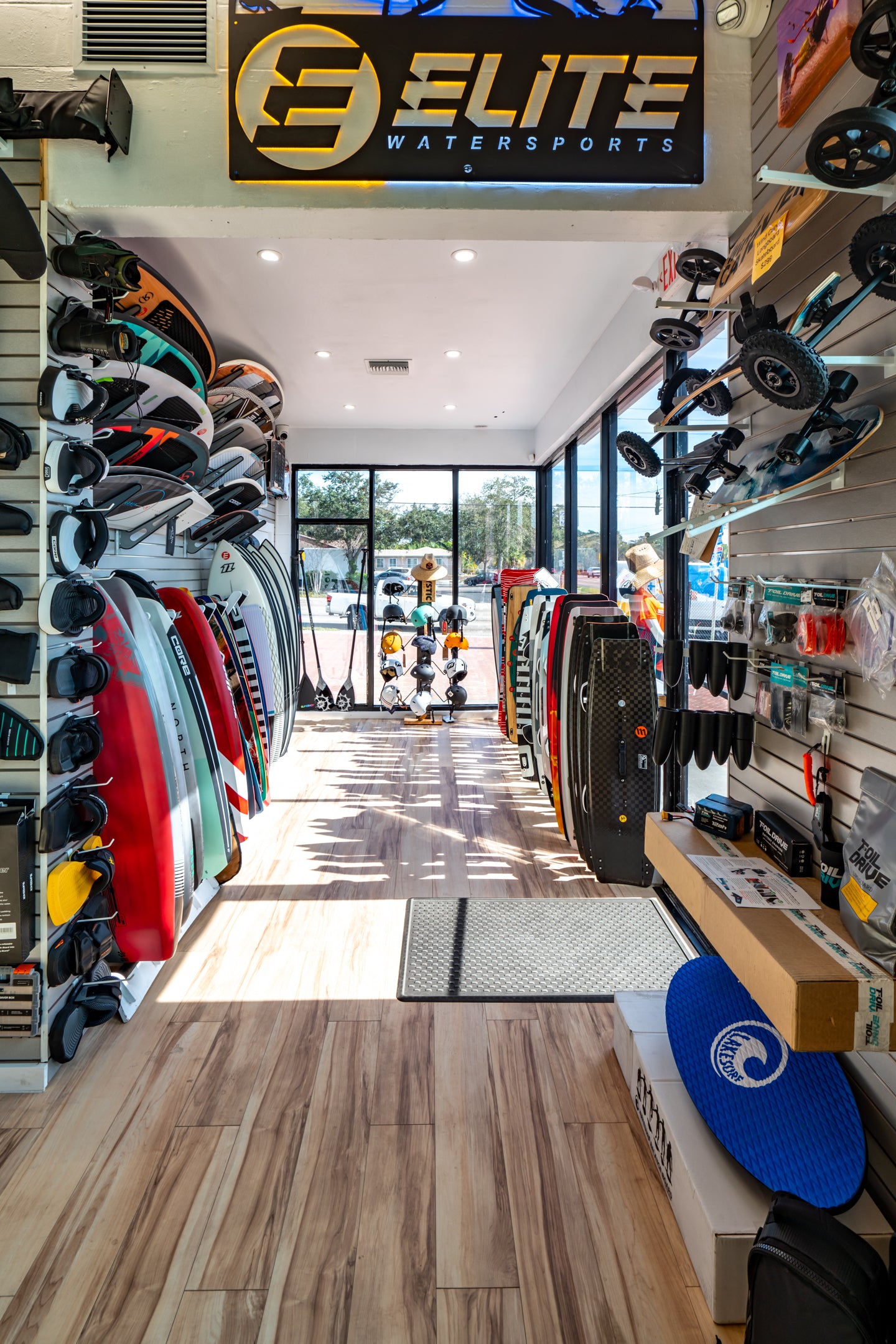
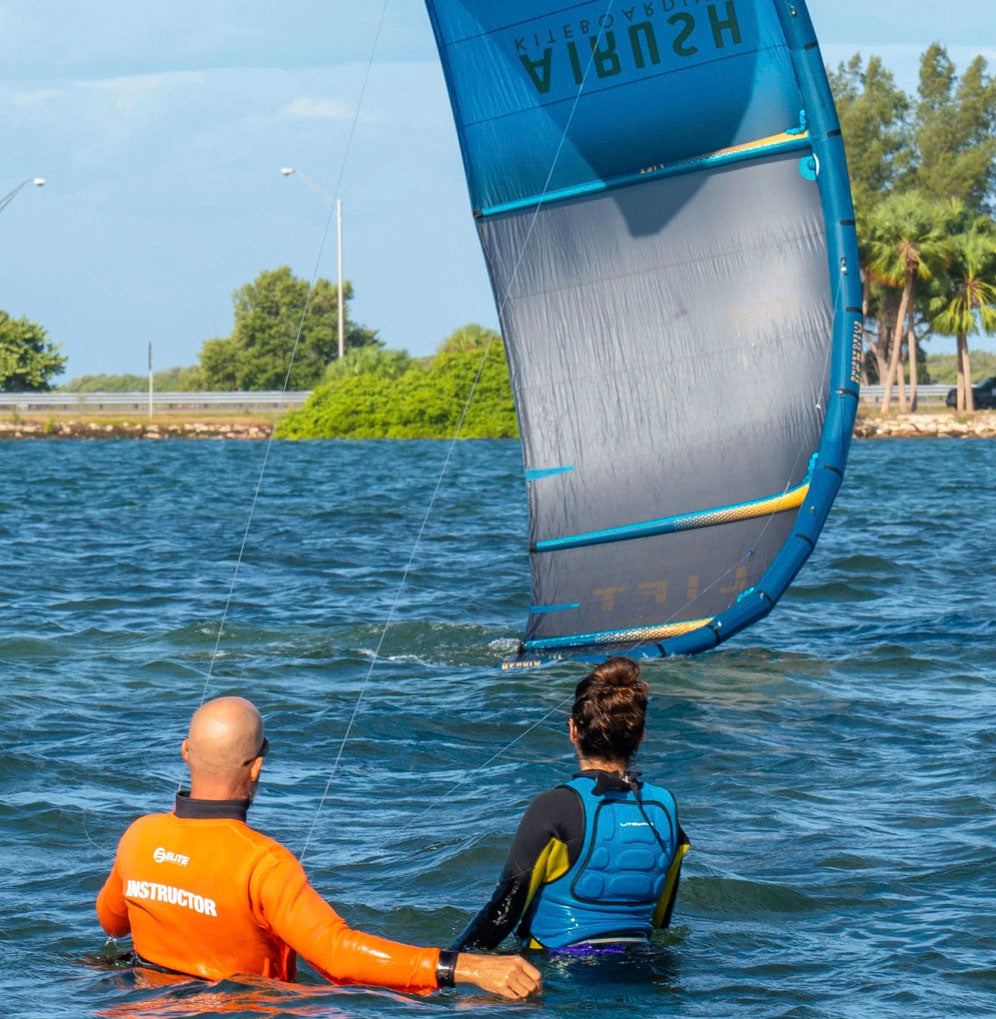
Elite Watersports has served the Tampa and St Petersburg area for years. They offer kiteboarding and wingsurfing lessons. They also have a retail shop equipt with the latest kitesurfing gear.
This is hands down the best location to learn kitesurfing. We have shallow, flat water and easy beginner conditions.
Call today and reserve your spot for jet-ski-supported lessons. If the wind is blowing, we're going!
If you need help give us a call. .
(727)-800-2202
Author

Ryan "Rygo" Goloversic
Rygo is a globally recognized kiteboarder, digital marketing expert and an advocate for wakestyle kiteboarding. When he's not writing articles, you can catch him competing on the KPLxGKA world tour or grinding it out in the gym.
Tags
Kiteboarding Florida Beaches

Want To learn more about kiteboarding?
Follow us to receive the latest update on our journey experience