
ELITE WATERSPORTS
Last updated 1-22-2026
What Wave Kite Should I buy?
Everything you need to know.

Best Wave Kites: Real Rider Breakdown by Drift, Turning Speed, and Surf Conditions
Wave riding changes everything about how a kite needs to behave.
Boosting and freeriding reward lift and power delivery. Surfing rewards control, drift, and timing. When you are carving down a wave face, your kite is either supporting the rhythm of the wave or pulling you out of position. That difference is what separates a true wave kite from a crossover design.
Most riders searching for the best wave kite are not just asking which brand jumps well. They are asking:
Which kite will stay stable when I ride toward it
Which kite will turn quickly without dragging me downwind
Which kite will let me depower instantly when the section steepens
Which kite will handle side-onshore wind without collapsing
These are the questions wave riders actually need answered before they choose a kite.
Along the Gulf Coast, and especially around St. Pete and Tampa Bay, wind is rarely perfect side-shore. Sessions often mean wind swell, short-period chop, and gust cycles layered on top of each other. In those conditions, drift and turning speed matter more than raw lift.
If you are deciding between North, Naish, CORE, Airush, Ozone, Cabrinha, or Reedin this page will give you the orientation you need before narrowing into specific model reviews.
Not sure which wave kite fits your riding?
Elite can help you choose the right size, setup, and model for the wind and surf you ride most often. Talk with the shop or start progressing with kiteboarding lessons.
Table Of Contents
- What Is Wave Riding in Kiteboarding and How Is It Different From Freeride?
- What Makes a Kite a True Wave Kite?
- What Are the Best Wave Kites Compared Side by Side?
- Does North Make Wave Kites?
- Does Naish Make Wave Kites?
- Does CORE Make Wave Kites?
- Does Airush Make Wave Kites?
- Does Cabrinha Make Wave Kites?
- Does Ozone Make Wave Kites?
- Does Reedin Make Wave Kites?
- What is the best wave kite setup for side onshore surf in St. Pete?
- How Do You Choose Between Wave Kite Brands?
- Wave Kites FAQ
- Elite Wave Kite Comparisons and Reviews
What Is Wave Riding in Kiteboarding and How Is It Different From Freeride?
Wave riding in kiteboarding is the practice of using wind power to access and surf a wave face, rather than using the kite as the primary source of pull.
In freeride, the kite creates continuous forward drive. In wave riding, the goal is often to reduce pull and let the wave generate speed. That shift changes everything about how the kite must behave.
When a rider drops into a wave and carves down the line, board speed can momentarily match or exceed wind speed. During that moment, line tension decreases. The kite has to keep flying cleanly even when the pull softens and the rider is closing distance toward it. It must remain stable while the rider moves toward it.
Wave riding also demands rapid redirection. Bottom turns, top turns, cutbacks, and foam climbs require the kite to move precisely and without delay. A wide sweeping turn can pull a rider off the face. A slow response can stall progression through a section.


Unlike big air sessions, where lift and hangtime define performance, wave sessions are judged by:
• Control while riding toward the kite
• Precision during direction changes
• Depower range in steep sections
• Stability in variable windStrapless riding increases these demands.
Without foot straps, any unexpected surge of power can separate rider from board. The kite must respond instantly and predictably.
Wind direction also plays a role. Side-shore wind allows the wave to carry more of the load. Side-onshore wind requires more active kite positioning and greater depower control. Many Gulf Coast sessions fall into the second category, which places more stress on kite handling rather than pure drift.
A wave kite exists to serve this environment. It is built around maneuverability, controlled power delivery, and stability when tension changes rapidly.
Understanding that difference is the foundation for evaluating brands and models correctly. A kite that feels excellent for boosting or freeride cruising can feel completely different when asked to follow a rider down a wave face.
Wave riding is not about maximizing pull. It is about managing it.
What Makes a Kite a True Wave Kite?
A true wave kite is engineered around tension control, turning precision, and stability when line load changes quickly.
It is not simply a freeride kite that happens to turn fast. The internal design priorities are different.
Drift Stability
Drift is the ability of the kite to remain forward in the wind window and stable when line tension drops.
When a rider carves down the line and moves toward the kite, the lines partially slacken. A dedicated wave design is tuned to resist backstalling and collapse during those moments. The canopy profile, bridle geometry, and aspect ratio are balanced to keep the kite flying forward rather than falling backward.
Kites that rely on constant pull to stay stable struggle here. They were never designed to fly under reduced load. If a kite falls apart the moment the lines go light, it will never feel trustworthy in real surf.
Pivot-Based Turning
Wave kites are built to rotate around a tight central axis rather than carve wide arcing loops.
This pivot-style turning allows the rider to redirect the kite quickly without being pulled off the face. The kite changes direction without generating excessive lateral pull.
This behavior is influenced by:
• Moderate aspect ratio
• Compact wingtip design
• Bridle configuration that allows immediate steering input
High-aspect freeride or big air kites tend to travel farther across the window during a turn. That arc creates lift and glide, but it does not prioritize face control.


Immediate Depower Response
In wave riding, power must be adjustable in seconds.
Wave kites are tuned for fast sheet response. When the rider pushes the bar away, the kite reduces pull smoothly without stalling or overflying.
This characteristic is tied to canopy depth, leading edge diameter, and bridle support. The goal is not maximum lift but controllable reduction of pull.
If a kite surges forward aggressively when depowered, it becomes unpredictable in steep sections.
Balanced Bar Feedback
Bar pressure on wave kites is typically moderate. Too heavy and the rider fatigues quickly during long sessions. Too light and steering becomes vague during slack moments.
The balance allows the rider to feel the kite’s position without overcorrecting.
Feedback clarity becomes more important in gusty or shifting wind, where small adjustments determine positioning on the wave.
Structural Layout
Most dedicated wave kites fall into two structural categories:
➢ Three-strut designs that balance drift with canopy stability
➢ Lightweight single-strut or reduced-strut designs that prioritize drift and low wind efficiency
Most wave riders end up choosing between a lighter feel for marginal wind days and a more structured feel for powered surf sessions.
The structural layout reflects the design intent. A wave kite is built to manage tension changes and turning precision first. Lift and hangtime are secondary considerations.
What Are the Best Wave Kites Compared Side by Side?
If you are comparing wave kites, the most important differences are not marketing labels. They are how each kite behaves under reduced tension, how quickly it pivots, and how controlled it feels when you redirect it on a wave face.
Below is a structural comparison of leading wave platforms across major brands. This is not a ranking. It is a behavior breakdown.
| Kite | Drift Stability | Turning Style | Bar Pressure | Wind Range Feel | Best For |
|---|---|---|---|---|---|
| North Carve | High | Tight pivot | Medium | Smooth and controlled top end | Riders who want balanced wave control in mixed conditions |
| Naish Slash | Very High | Fast pivot | Medium-light | Reactive and responsive | Strapless and down-the-line wave focus |
| CORE Section | High | Controlled pivot | Medium | Stable in gusty wind | Riders who prefer structure and canopy composure |
| Airush Session | High | Direct pivot | Light-medium | Efficient with steady delivery | Wave riders who also mix freeride sessions |
| Airush Ultra Team | Very High in lighter wind | Quick pivot | Light | Strong low-end efficiency | Light wind wave and foil crossover |
| Ozone Reo | Very High | Immediate pivot | Light-medium | Progressive and precise | Active wave riding with fast input response |
| Cabrinha Drifter | High | Controlled pivot | Medium | Stable in powered wind | Riders who want predictable control in stronger conditions |
| Reedin SuperModel | Medium | Sweeping arc | Medium | Freeride-leaning power | Riders blending waves, boosting, and freeride |
This table is here to help you self select quickly. If you want the deeper details on any model, jump to the brand section below and then into the full review.
The deeper brand sections will explain these differences in context. Here, the goal is orientation.
You should already begin seeing which direction fits your riding style.
Does North Make Wave Kites?
North offers a dedicated wave-focused platform built specifically for down-the-line riding, as well as crossover options that can handle surf conditions depending on rider preference.
● North Carve ● North Reach (crossover option)
Is the North Carve a True Wave Kite?
The North Carve is North’s dedicated surf-oriented kite. It is designed around controlled drift, compact pivot turning, and a smooth depower response that supports carving rather than boosting.
Compared to North’s freeride models, the Carve sits slightly deeper in the window and redirects more tightly, allowing riders to adjust positioning quickly during bottom and top turns. The feel is composed and predictable when tension shifts mid-ride.
Riders typically choose the Carve if they:
✔ Ride strapless
✔ Prioritize carving over lift
✔ Spend time in side-onshore wind
✔ Want a kite that stays stable when moving toward it
If you are trying to sort the Carve vs Reach vs the rest of North’s lineup, this guide makes it easier to see what each model is built to do.


Can the North Reach Be Used for Wave Riding?
The North Reach is not a dedicated wave kite, but it is commonly used as a crossover option by riders who mix freeride, boosting, and occasional surf sessions.
Compared to the Carve, the Reach:
• Produces more lift
• Has a broader turning arc
• Feels more versatile across disciplines
It can handle waves, especially in powered conditions, but it does not prioritize slack-line stability in the same way the Carve does.
If you want to understand how the Reach has evolved and where it fits click on the links below for a more indepth review.
⤷ The North Reach Kite Review
⤷ 2023 vs 2024 vs 2025 North Reach Comparison
These reviews clarify how the Reach balances freeride versatility with moderate surf capability.
Does Naish Make Wave Kites?
Naish has long produced dedicated wave-oriented kites built specifically for surf control, along with crossover options for riders who blend disciplines.
● Naish Slash ● Naish Pivot
Is the Naish Slash Built for Surf Riding?
The Slash is Naish’s surf-oriented platform. It is tuned for riders who want fast steering response and stable behavior when tension changes mid-turn.
On a wave face, the Slash feels compact and direct. It redirects quickly without dragging you down the line, and it maintains composure when you move toward it during a carve.
This is the kite riders gravitate toward when their priority is:
• Clean directional changes
• Controlled pull during cutbacks
• Confidence in variable wind
• Strapless progression
The Slash is built around control first. Lift and hangtime are not the priority.


Can the Naish Pivot Work in Waves?
The Pivot sits in a different lane. It blends freeride lift with enough steering precision to handle surf sessions, especially in powered wind.
Compared to the Slash, the Pivot:
• Carries more vertical lift
• Pulls more consistently through turns
• Feels broader in its performance range
Riders who want one kite for boosting, cruising, and occasional wave days often choose the Pivot because it does not lock them into one discipline.
Riders focused purely on carving tend to choose the Slash.
Riders who want lift in addition to surf capability often lean toward the Pivot.
If you are deciding between the Slash, Pivot, and the rest of Naish’s lineup, this guide helps you see what each model is designed to do without getting lost in spec talk.
Does CORE Make Wave Kites?
CORE offers a surf-oriented model built around composure, structure, and control when riding waves in powered conditions.
● CORE Section ● CORE Nexus (Crossover)
Is the CORE Section Built for Surf Riding?
The CORE Section is the model riders gravitate toward when their priority is carving and control.
It has a composed, stable feel through the canopy and tends to stay settled even when the wind becomes gusty. The steering is clean and deliberate rather than twitchy, which many riders appreciate in powered surf conditions.
Instead of feeling ultra-light and loose, the Section carries structure. That gives it confidence when the wind picks up or when you need to redirect with authority during a turn.
The Section is chosen by riders who want control and canopy stability more than lift or freestyle crossover.


Can the CORE Nexus Be Used in Waves?
The Nexus is not a wave-first kite, but it comes up for riders who want one kite that can still handle wave sessions. It is not shaped purely around surf performance, but many riders use it in waves because it blends freeride lift with controlled steering. It tends to feel more energetic and playful compared to the Section.
Riders who mix boosting, freeride cruising, and occasional surf sessions often prefer the Nexus because it allows them to move between disciplines without switching kites.
If carving down the line is your primary focus, the Section usually becomes the cleaner fit.
If you want one kite that handles multiple sessions, the Nexus often enters the conversation.
If you want to see how CORE positions each model across wave, freeride, and big air, this lineup guide makes the decision cleaner.
Does Airush Make Wave Kites?
Airush offers a surf-focused model for riders who prioritize drift and clean steering, along with lightweight options that blur into foil and crossover territory.
● Airush Session ● Airush Ultra Team
Is the Airush Session Built for Wave Riding?
The Session is the Airush model most wave riders land on when carving is the priority.
It has a smooth, composed feel and tends to sit where you place it without demanding constant correction. Steering is quick but not twitchy. The power delivery feels balanced rather than explosive, which makes it easier to manage when you’re redirecting mid-face.
If you want a closer look at how the current version behaves, this 2026 Airush Session V2 review breaks down how it feels on the water and how it evolved.
There’s also a Session Team V2 review that explains what changes when construction and tuning shift slightly.
If your sessions are powered and structured, the Session generally feels more planted than Airush’s lighter builds.

Is the Airush Ultra Team Good for Wave Riding?
The Ultra Team sits in a lighter, more minimal lane.
Because of its reduced weight and simplified structure, it stays in the air easily and performs well in lighter wind. Riders who surf in marginal conditions or blend foil sessions into their week often look at the Ultra Team first.
This breakdown of the Ultra V5 vs Ultra Team V5 helps clarify the differences in feel and tuning.
And this Ultra Team DS overview adds context around how the design leans toward efficiency and lightweight response.
If you want to see how Airush separates the Session, Ultra, and the rest of their lineup, this guide makes it easier to choose without overthinking it.
For powered surf carving, most riders lean toward the Session - For lighter wind or foil crossover days, the Ultra Team often becomes the
Does Cabrinha Make Wave Kites?
Cabrinha offers a surf-focused model designed specifically for riders who want steady control and reliable drift while riding waves.
● Cabrinha Drifter
Is the Cabrinha Drifter Built for Surf Riding?
The Drifter is Cabrinha’s surf-oriented platform. It is shaped around one priority: staying stable when you ride toward it.
The feel of the Drifter is composed and predictable. It does not rush forward aggressively when you depower, and it does not demand constant correction when tension changes. Riders who spend real time carving appreciate that steadiness.
The Drifter tends to attract riders who:
✔ Want confidence in gusty wind
✔ Prefer a more settled canopy feel
✔ Spend time riding strapless
✔ Value control over lift
Instead of feeling explosive, the Drifter feels controlled. Steering is deliberate and clean, and the kite stays where you place it without overreacting.
It is not built around boosting height or freestyle crossover. Its character leans toward wave sessions where positioning and stability matter more than vertical lift.

If you are choosing the Drifter, the simplest way to validate the fit is to think about your sessions. If most of your wave days are powered and you want a stable, predictable kite that does not feel twitchy, the Drifter is usually the Cabrinha model people land on.
Does Ozone Make Wave Kites?
Ozone builds a surf-focused platform for riders who want quick steering response and clean control while carving.
● Ozone Reo
Is the Ozone Reo Good for Wave Riding?
The Reo is Ozone’s surf-oriented model. It has a reputation for feeling quick and precise rather than heavy or dampened.
When you redirect the Reo, the movement is immediate. It responds to small bar input without delay, which makes it appealing to riders who like to stay active while carving rather than park the kite and forget about it.
The Reo tends to suit riders who:
• Prefer a lighter steering feel
• Like tight, reactive turning
• Spend time riding directional boards
• Want a kite that feels agile rather than planted
It is not built around vertical lift or freestyle crossover. Its tuning leans toward control and responsiveness on a wave face.
If you’re stuck between the Reo and another Ozone model and just want to see how they split up their lineup, this guide makes it easier to sort through without guessing.

Does Reedin Make Wave Kites?
Reedin builds crossover-focused kites that can handle wave riding, though their lineup leans more toward freeride versatility than pure down-the-line surf tuning.
● Reedin SuperModel
Can the Reedin SuperModel Be Used for Wave Riding?
The SuperModel is not a wave-first kite in the traditional sense, but it is frequently used by riders who want one kite that can boost, cruise, and still handle surf sessions.
Compared to dedicated surf platforms, the SuperModel:
• Carries more lift through turns
• Feels more energetic and freeride-oriented
• Uses a slightly broader turning arc rather than a tight pivot
On a wave face, it feels more powerful and engaged rather than purely neutral. Riders who prefer an active kite that stays involved during carving often enjoy this feel. Riders who want maximum slack-line stability and minimal pull during bottom turns usually look toward more surf-tuned platforms instead.
The SuperModel tends to make sense for riders who:
✔ Mix waves and freeride in the same week
✔ Want vertical lift in addition to surf capability
✔ Prefer a lively canopy feel over a dampened one
✔ Do not want separate kites for every discipline

If your sessions are mostly true down-the-line surf, a dedicated wave model from other brands may feel cleaner.
If your riding blends boosting, carving, and freeride cruising, the SuperModel often becomes the practical compromise.
If you want to compare the Reedin lineup, check out our detailed guide.
What is the best wave kite setup for side onshore surf in St. Pete?
If you are riding St. Pete style surf, you already know the deal. The wind is rarely perfect side shore, the water gets tight and choppy fast, and a wave kite that feels amazing in a clean swell can start feeling annoying when the wind has teeth. In side onshore, you are not just drifting the kite down the line. You are constantly managing position so you can stay on the face without getting pulled off it.
The simplest way to choose the right wave kite in these conditions is to prioritize control over excitement. You want a kite that turns quickly without surging, stays composed when the wind spikes, and lets you dump power fast when the section steepens.
That is why a lot of riders in Tampa Bay conditions end up preferring more balanced wave platforms over ultra twitchy or ultra light builds.
If you are unsure whether you should be on a surf first kite or a crossover model, the fastest shortcut is to ask one question.
Are most of your sessions real surf sessions, or are you mixing boosting, cruising, and waves in the same week?
If it is mostly surf, pick a wave first kite.
If it is mixed, a crossover kite can make more sense, especially if your wave days are not consistent.
If you want help narrowing the exact model and sizing for your weight and typical wind range, Elite can walk you through it quickly.
Start with kiteboarding lessons if you want coaching, or contact the shop if you are ready to choose a kite.
How Do You Choose Between Big Air Kite Brands?
Once you’ve narrowed it down to true surf-oriented platforms, the real decision usually comes down to feel, conditions, and how you ride.
At this stage, the question is not “which one is good?”
They are all good.
The question is: which one aligns with how you move on a wave?
Here are the filters that actually matter.
Do You Like a Reactive or Planted Feel?
Some riders want the kite to respond instantly to small input. Others prefer something slightly more composed that holds shape under load.
If you ride actively and adjust the kite constantly, a lighter and more agile feel often suits you.
If you prefer a steadier canopy that feels settled when powered, a more structured platform usually makes sense.
Neither is better. They just feel different.
What Kind of Wind Do You Ride Most Often?
Clean side-shore swell rewards drift and light steering.
Side-onshore wind or wind swell often rewards canopy stability and controlled power delivery.
If most of your sessions are powered and choppy, lean toward models that feel solid under load.
If you ride clean swell or lighter wind, lean toward models that stay efficient and responsive.
Are You Pure Surf or Do You Mix Sessions?
If wave riding is your primary discipline, lean toward the brand’s surf-focused model.
If you mix boosting, freeride cruising, and occasional surf, crossover options start making more sense.
Be honest about how you actually ride, not how you imagine you ride.
What Bar Feel Do You Prefer?
Bar feedback is often overlooked.
Some kites communicate clearly through moderate tension. Others feel lighter and more minimal.
This is personal. If possible, demoing matters more than reading specs.
What Is Available Locally?
Support matters.
If your local shop stocks a brand consistently, carries replacement parts, and understands tuning, that is not a small factor.
Access to parts, warranty support, and knowledgeable feedback often matters more long-term than subtle design differences.
Choosing between wave kite brands is less about finding “the best” and more about identifying which design philosophy aligns with your riding style and wind reality.
Ready to choose your next kite?
Browse our full kite collection or reach out to the shop if you want help choosing the right model and size for your wind conditions.

FAQ: Wave Kites
What makes a kite good for wave riding?
A wave-focused kite prioritizes controlled steering, stable flight when tension changes, and smooth power delivery during carving. Instead of maximizing lift or hangtime, it is tuned for positioning and redirection on a wave face.
Can you use a freeride kite for surfing waves?
Yes, but the experience feels different. Freeride kites often carry more lift and broader turning arcs. They can handle waves, especially in powered conditions, but they do not prioritize slack-line stability or tight pivot turning the way surf-oriented models do.
Are wave kites only for strapless riding?
No. Many riders use straps, especially in powered surf or choppy conditions. However, wave-focused kites are often chosen by strapless riders because of their predictable steering and tension control.
Do wave kites jump well?
They can jump, but they are not designed for maximum height or long hangtime. Their tuning favors carving control rather than vertical lift. Riders focused on boosting typically look at freeride or big air platforms instead.
What is the difference between drift and depower?
Drift refers to how well a kite remains stable when line tension decreases, such as when riding toward it. Depower refers to how smoothly the kite reduces pull when you sheet out. Both matter in surf, but they describe different behaviors.
Are lighter kites better for waves?
Lighter construction can improve low-end efficiency and responsiveness, especially in marginal wind. However, in stronger wind, some riders prefer a slightly more structured canopy that feels stable under load. The better choice depends on typical wind conditions.
Do wave kites work in side-onshore wind?
Yes, but behavior varies by design. In side-onshore conditions, the kite often stays more active, so steering precision and controlled power delivery become more noticeable than pure drift.
What size wave kite should I choose?
Size depends on rider weight, board type, and wind speed. Many riders prefer slightly smaller sizes for wave sessions to maintain control during carving. For detailed sizing guidance, wind range and rider factors should always be considered together.
Are crossover kites a good option for waves?
Crossover kites can work well for riders who blend freeride and surf sessions. They offer more lift and versatility but may sacrifice some of the tight steering feel and tension control found in more surf-focused designs.
How do I know which wave kite brand fits me best?
Once you narrow it to surf-oriented platforms, the differences come down to steering feel, canopy structure, and how the kite behaves under load. Demoing when possible and choosing a brand supported locally often matters more than minor design differences.

Elite Wave Kite Comparisons and Reviews
If you want to go deeper into real head-to-head differences, these are the strongest wave and crossover comparisons we’ve published. Each one breaks down steering feel, drift behavior, tension management, and how these kites behave in Florida wind and surf conditions. If you are narrowing your decision between two specific platforms, start here.
⤷ Naish Slash vs North Carve – Florida Wave Comparison – A direct breakdown of two true surf-focused platforms. This comparison explores turning response, slack-line stability, canopy composure under load, and how each kite feels in side-onshore Florida conditions.
⤷ North Reach vs CORE Pace – 2025 Buyer’s Comparison in Tampa Bay – A crossover-focused matchup examining lift profile, steering feel, and versatility. Ideal for riders deciding between a surf-leaning freeride kite and a more structured crossover platform.
⤷ CORE Air Pro vs Naish Pivot – Light Wind Efficiency vs Surf Bias – A head-to-head comparison focused on marginal wind performance, crossover lift, and how much surf tuning you sacrifice for versatility. Particularly helpful for riders blending foil, freeride, and wave sessions.
Why you should take Kiteboarding Lessons with Elite Watersports.
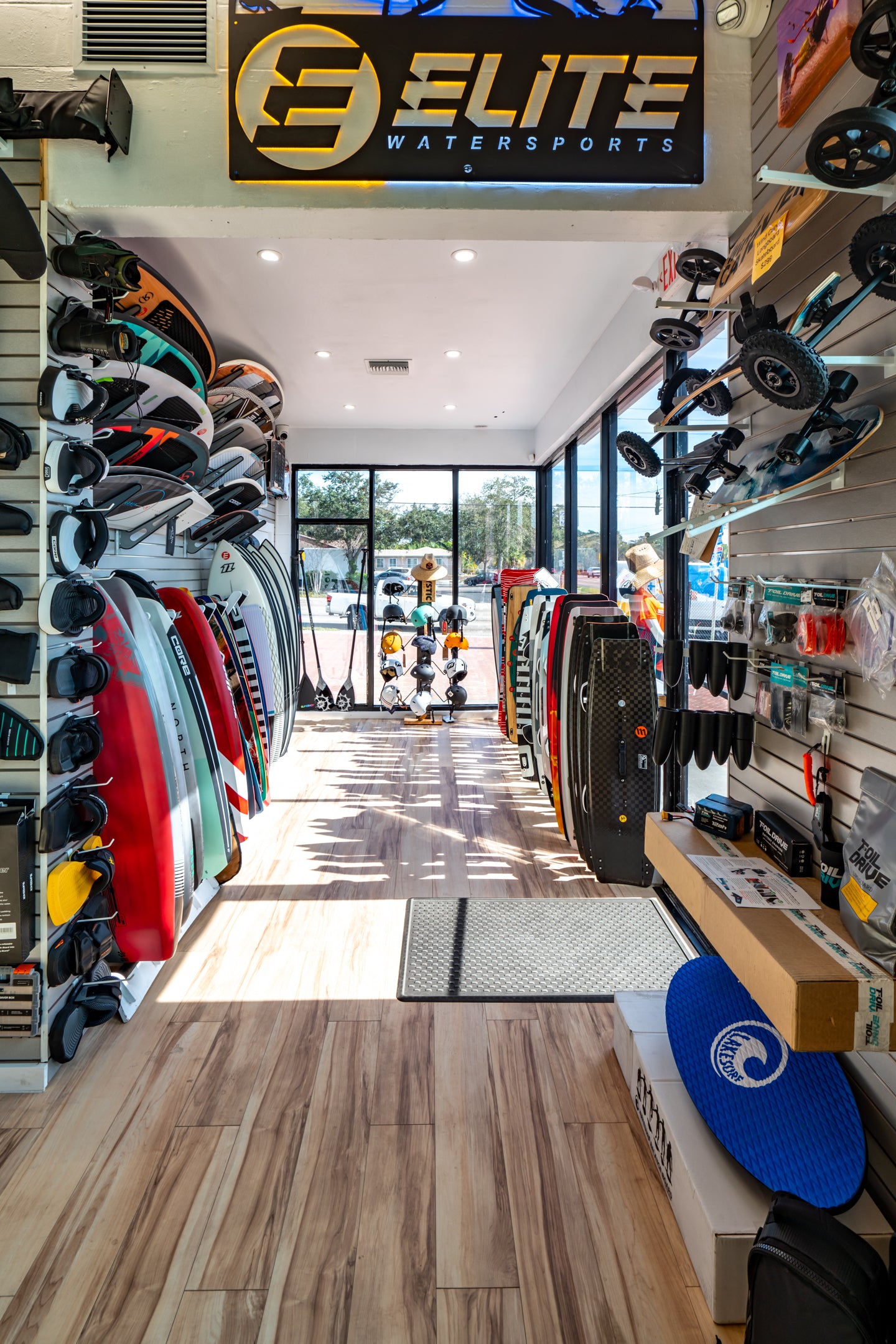
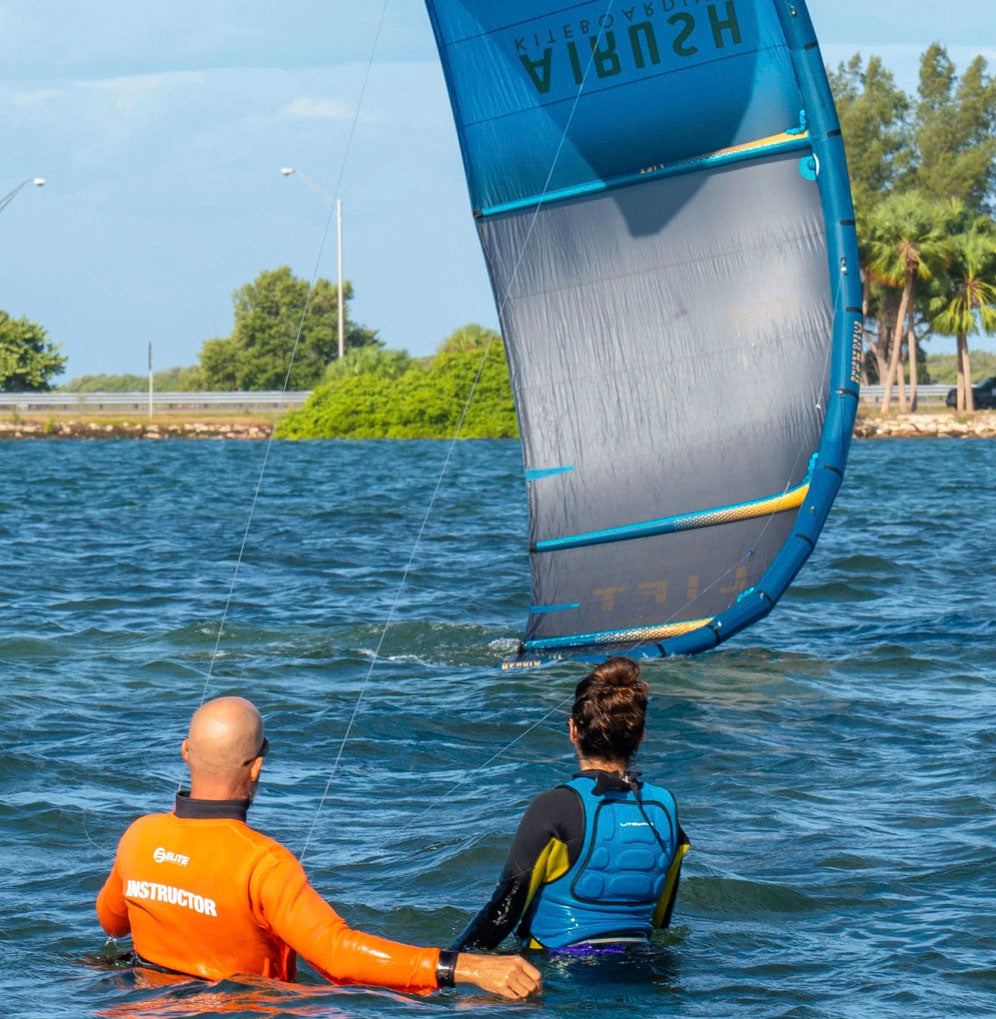
Elite Watersports has served the Tampa and St Petersburg area for years. They offer kiteboarding and wingsurfing lessons. They also have a retail shop equipt with the latest kitesurfing gear.
This is hands down the best location to learn kitesurfing. We have shallow, flat water and easy beginner conditions.
Call today and reserve your spot for jet-ski-supported lessons. If the wind is blowing, we're going!
If you need help give us a call. .
(727)-800-2202
Author

Ryan "Rygo" Goloversic
Rygo is a globally recognized kiteboarder, digital marketing expert and an advocate for wakestyle kiteboarding. When he's not writing articles, you can catch him competing on the KPLxGKA world tour or grinding it out in the gym.
Tags
Kiteboarding Florida Beaches
Want To learn more about kiteboarding?
Follow us to receive the latest update on our journey experience