
ELITE WATERSPORTS
Last updated 1-22-2026
What Airush Kite Should I Buy?
Everything you need to know.

Which Airush Kite Should I Buy? A Real-World Guide to the Airush Kite Lineup
Choosing the right kite can be confusing, especially with how many solid options Airush offers.
Most brands make every kite sound like it does everything. In reality, every kite is designed around a primary job, with some overlap depending on skill level and conditions. That overlap is where people get confused and where bad buying decisions usually happen.
Over the years, grouping kites by riding category has been the clearest way to see what actually matters. Every brand ends up with the same core buckets: freeride, big air, wave, freestyle, foil, and lightweight or single-strut designs. Airush is no different, but they’re very intentional about how each model fits into that structure.
Airush designs each kite around a specific job. Some make progression easier. Others are built to perform when conditions line up. While there is crossover, each kite still feels distinct on the water.
This guide breaks the Airush lineup down in plain language, based on years of riding and teaching through kiteboarding lessons in St. Pete. No tech-manual talk. No marketing fluff. Just real-world perspective from riding and teaching in places like St. Pete and traveling with this gear in a wide range of conditions.
By the end, you’ll know which Airush kite fits your riding style, your local wind, and where you’re actually at right now, not where you think you should be.
Tip from Aaron McClearnon: Call the shop and demo the gear. Reading helps, but flying the kite tells the truth. We run demos, lessons, and events for a reason. Come ride with us and see what resonates.
Table Of Contents
- How Airush Structures Their Kite Lineup
- Airush Lithium
- Airush Ultra v5
- Airush Lift v4
- Airush Session v2
- Airush Razor v10
- How to Choose the Right Airush Kite for You
- FAQ: Airush Kites
- How to Use This Airush Kite Guide
How Airush Structures Their Kite Lineup
Before looking at individual models, it helps to understand how Airush thinks about kite design as a whole.
Airush does not build “do-it-all” kites and then tweak marketing language to make them fit different riders. Each model is developed around a primary riding purpose, and everything from canopy shape to strut layout to material choice follows that intention. Some overlap exists, especially as riders progress, but the core job of each kite stays consistent year to year.
In practice, the Airush lineup falls into a few clear categories:
- Some kites are built to make learning and progression smoother.
- Others prioritize efficiency and staying in the air when the wind is light.
- Some are tuned for height and control when the wind turns on.
- Others are designed to disappear while you ride waves or to deliver the precision required for unhooked freestyle.
Understanding these categories matters more than memorizing model names.

f you choose the right category, the exact model decision becomes straightforward.
If you choose the wrong category, even the best kite on the market will feel like the wrong tool.
That is why we always start by matching the kite to how you actually ride, not how you think you should ride.
Below, we break down each Airush model by what it is designed to do best, how it feels on the water, and who it realistically makes sense for.
Not sure which Airush kite category fits your riding?
Use this guide as your quick filter: freeride vs light wind/foil vs big air vs wave vs freestyle — then narrow down the exact model and size.
Ask the ShopAirush Lithium
Is the Airush Lithium a Good All-Around Kite?
If you’re not sure where to start in the Airush lineup, the Lithium is usually the reference point.
The Lithium is Airush’s all-around freeride kite. It’s designed to cover the widest range of riders and conditions without pushing toward a specific discipline. That’s why it’s commonly used by schools, progressing riders, and experienced kiters who want a predictable, easy-to-manage session.
At
How the Lithium Feels on the Water
The Lithium has a calm, balanced feel with smooth power delivery. It sheets in and out cleanly without sudden spikes, which makes it easy to control during transitions, waterstarts, and upwind riding.
Key characteristics:
• Stable and predictable through gusts
• Medium turning speed that stays controlled, not twitchy
• Light-to-medium bar pressure with clear feedback
• Reliable relaunch with minimal input
Jumping is straightforward. You don’t need perfect timing to get lift, and landings tend to feel forgiving. Loops are smooth and recover predictably, making it a common choice for riders learning basic loops and higher jumps.
Who the Lithium Is Suited For
The Lithium works well for:
✔ New riders learning fundamentals
✔ Intermediate riders progressing into jumps and transitions
✔ Riders who want one kite to handle changing conditions
✔ Locations with inconsistent wind, like much of Florida
It’s also common among instructors and experienced riders who prioritize consistency and ease of use over specialization.
Read Also: 2026 Airush Lithium V14 Review

Lithium vs. Lithium Team
The Lithium Team is not a different kite model. It is the same Lithium design built with lighter, higher-end materials.
What changes:
• Slightly faster response
• More direct feel on the bar
• Improved efficiency and drift
What stays the same:
• Forgiving character
• Wide usability
• Freeride focus
Most riders are well served by the standard Lithium. The Team version is for riders who value lighter handling and sharper feedback rather than a different riding style.
When the Lithium Makes Sense
The Lithium is a good choice if you want:
✔ One kite that covers a broad range of sessions
✔ Predictable behavior while progressing
✔ A freeride-focused platform without specializationI
f you want to compare it directly with other Airush models or fly one yourself, demos and lessons at Elite Watersports are the best way to feel the differences firsthand.
Airush Ultra v5
Is the Airush Ultra v5 a Good Kite for Light Wind and Foiling?
The Airush Ultra is built for efficiency first.
This is Airush’s single-strut kite, designed to stay in the air when the wind is marginal and to feel light and neutral while riding a foil or directional board. Compared to multi-strut freeride kites, the Ultra prioritizes reduced weight and easy drift over structure and lift.
In places like Florida, where lighter wind days are common, the Ultra is often used to extend sessions that would otherwise be unridable.
What the Ultra Is Designed to Do
The Ultra focuses on keeping things simple and light:
• Minimal weight for better low-end flying
• Easy relaunch in light wind
• Neutral pull that works well on a foil
Smooth drift when riding downwind
The kite turns quickly and stays responsive without feeling aggressive. It does not generate the same vertical lift or hangtime as freeride or big-air models, and it is not meant to.
Who the Ultra Makes Sense For
The Ultra is typically chosen by:
• Riders focused on foiling
• Light-wind riders looking to maximize water time
• Directional board riders who value drift
• Riders who prefer a kite that stays quiet in the sky
Some riders also use the Ultra on a twin tip in lighter wind, but its strengths show most clearly when paired with a foil or surfboard.

Where the Ultra Fits in the Lineup
The Ultra is not a replacement for the Lithium or Lift.
It fills a different role.
If your goal is jumping, powered riding, or strong wind performance, another kite in the lineup will make more sense.
If your goal is staying on the water when the wind barely shows up, the Ultra is built for that job.
Read also our comparison blog: "What’s the difference between the Airush Ultra v5 and the Ultra Team v5?"

Airush Lift v4
Is the Airush Lift v4 Built for Big Air Riding?
The Airush Lift is designed for height, stability, and control when the wind turns on.
This is Airush’s dedicated big air kite. It uses a higher-aspect shape and a more rigid frame to stay composed at speed and under load. Compared to freeride or light-wind models, the Lift prioritizes lift, hangtime, and predictable recovery rather than versatility.
It’s the kite Airush builds for riders who want to jump higher and feel confident doing it. If big air progression is your focus, we also break this down further in our guide to the best kites for big air.
What the Lift Is Designed to Do
The Lift focuses on strong-wind performance:
• Stable structure under heavy load
• Clean vertical lift and extended hangtime
• Predictable behavior when edging hardControlled recovery after loops
The kite likes to be ridden powered. When timed correctly, it rewards committed edging with clean takeoff and float rather than sudden pull.
Who the Lift Makes Sense For
The Lift is typically chosen by:
• Intermediate to advanced riders focused on jumping
• Riders comfortable riding powered
• Kiters looking for stability in stronger wind
• Riders progressing into higher jumps and loops
It is not designed for foiling or light-wind cruising, and it is less forgiving than freeride models when underpowered.

Where the Lift Fits in the Lineup
The Lift sits above the Lithium in terms of specialization.
If your goal is all-around riding or learning, the Lithium makes more sense.
If your sessions are about sending it when the wind is solid, the Lift is built specifically for that use.
Airush Session v2
Is the Airush Session v2 Designed for Wave and Strapless Riding?
The Airush Session is built to stay out of the way while you ride a wave.
This is Airush’s dedicated wave and strapless freestyle kite. Its design prioritizes drift, quick turning, and controlled depower rather than lift or hangtime. The goal is to let riders focus on board placement and wave timing without the kite pulling them off line.
What the Session Is Designed to Do
The Session emphasizes control and positioning:
✔ Strong drift when riding down the line
✔ Fast, pivot-style turning
✔ Smooth depower for shutting the kite off mid-ride
✔ Stable flight when lines slacken
The kite responds quickly without generating aggressive pull, which helps when redirecting through tight sections or riding toward the kite in onshore conditions.

Who the Session Makes Sense For
The Session is typically chosen by:
• Riders on surfboards or directional boards
• Strapless riders working on control and flow
• Riders spending time in waves or rolling swell
• Kiters who want minimal lift and smooth power delivery
It can be used by intermediate riders, but it tends to feel most natural once a rider is comfortable managing speed and board control on a directional setup.
Where the Session Fits in the Lineup
The Session fills a different role than the Lithium or Lift.I
f your sessions revolve around waves, swell, or strapless riding, the Session is designed specifically for that environment.
If jumping, cruising, or light-wind efficiency is the priority, other models in the lineup will be a better match.
Check out our 2026 Airush Session V2 Review | Surf & Strapless Focus & 2026 Airush Session Team V2 Review | Florida Surf & Strapless Breakdown blogs.
Airush Razor v10
Is the Airush Razor v10 Built for Freestyle Riding?
The Airush Razor is designed for unhooked freestyle.T
his is Airush’s C-kite platform, built for riders who want direct control, consistent slack, and predictable pop. Unlike freeride or big-air kites, the Razor is not tuned for lift or hangtime. Its purpose is precision and repeatability when riding unhooked.
What the Razor Is Designed to Do
The Razor focuses on control and feedback:
• Direct bar feel with minimal delay
• Consistent pull when unhooked
• Clean slack for passes and rotations
• Predictable kite position throughout tricks
The kite sits deeper in the window and reacts deliberately rather than quickly. That behavior helps riders load the edge, release cleanly, and know exactly where the kite will be during technical maneuvers.


Who the Razor Makes Sense For
The Razor is typically chosen by:
✔ Riders focused on unhooked freestyle
✔ Park riders and flatwater freestyle riders
✔ Kiters comfortable managing a C-kite
✔ Riders prioritizing consistency over versatility
It is not designed for beginners or casual freeride sessions. Riders new to unhooked riding usually progress more comfortably on freeride kites before transitioning to the Razor.
Where the Razor Fits in the Lineup
The Razor is the most specialized kite in the Airush lineup.
If your riding centers on passes, powered pop, and technical freestyle, the Razor is built specifically for that purpose. If your sessions involve cruising, jumping, or mixed conditions, other models will be a better fit.
How to Choose the Right Airush Kite for You
At this point, you don’t need more specs. You need clarity.
Choosing the right Airush kite isn’t about chasing the “best” model or buying what someone else rides. It’s about matching the kite to how you actually spend most of your time on the water. Once that clicks, the decision usually becomes obvious.
We see riders get stuck here all the time. They overthink small differences or buy for the rider they want to be a year from now. That usually slows progression rather than speeding it up.
So here’s how we walk riders through it.
Start With How You Actually Ride
Forget the one-off sessions. Think about your average day.
If most of your riding looks like cruising, working on transitions, learning jumps, or riding in mixed conditions, the Airush Lithium makes sense. It covers the widest range of sessions and doesn’t demand perfect timing or wind to feel good.
If you’re chasing lighter wind days, foiling, or trying to stay on the water when others are waiting on the beach, the Airush Ultra v5 is built for that. It’s about efficiency and staying flying, not jumping high or riding powered.
If your favorite sessions are the windy ones, when you’re edging hard and sending jumps, that’s where the Airush Lift v4 fits. It likes wind, speed, and commitment. It’s not trying to do everything, it’s trying to do that one thing well.
If you’re riding a surfboard or spending time in waves, the Airush Session v2 starts to make a lot more sense. It stays out of the way, drifts when you ride toward it, and lets you focus on the wave instead of managing power.
And if unhooked freestyle is your main goal, the Airush Razor v10 exists for a reason. It’s specialized, direct, and not forgiving. But for riders committed to that path, it does things other kites simply don’t.
Be Honest About Where You’re At
This part matters more than people like to admit.
A lot of riders try to jump straight into specialized gear because they don’t want to “outgrow” something. In reality, most progression happens faster on kites that give you room to make mistakes.
If you’re still dialing in waterstarts, riding upwind, or learning consistent jumps, a freeride or light-wind kite will usually help more than a big air or freestyle model. Specialization makes sense once your fundamentals are solid and your goals are clear.
Think About Your Local Conditions
Where you ride changes everything.
In places with variable or gusty wind, versatility and relaunch tend to matter more than peak performance. In stronger, more consistent wind, it’s easier to lean into a more specialized kite.
That’s why the “right” kite in Florida doesn’t always match the right kite somewhere else. Your conditions shape what makes sense far more than marketing categories.
Fly the Kite If You Can
At the end of the day, feel matters.
Bar pressure, turning speed, how a kite drifts or recovers after a loop, those things don’t come through on a spec sheet. Two kites can look similar on paper and feel completely different in the air.
If you’re unsure, flying the kite once often answers the question faster than hours of reading.
The team at Elite Watersports can help talk through options, and demos are the easiest way to figure out what actually resonates.
From here, a simple comparison table can help summarize the lineup. But the real decision usually happens when riders stop comparing and start thinking honestly about how they ride.
Airush Kite Lineup Comparison (Quick Reference)

Still unsure?
Specs and descriptions help, but nothing replaces flying the kite. If you’re between models or sizing, a short conversation or demo session usually makes the decision obvious. That’s why we encourage riders to test gear and talk through options before committing.

FAQ: Airush Kites
Which Airush kite is best if I only want one kite?
Most riders looking for a single-kite setup choose a freeride model because it covers the widest range of conditions. In the Airush lineup, that usually points toward the Airush Lithium, since it balances stability, range, and ease of use without specializing too heavily in one discipline.
Is the Airush Ultra only for foiling?
No, but foiling is where it shines most. The Airush Ultra v5 is designed to be very light and efficient, which helps in low wind. Some riders also use it for directional riding or light-wind twin-tip sessions, but it is not built for jumping or powered riding.
What’s the main difference between the Lithium and the Lift?
The Lithium is a freeride kite designed for versatility and progression. The Airush Lift v4 is built specifically for jumping higher and riding powered. If your sessions are about implying comfort, progression, and range, the Lithium fits better. If your sessions revolve around sending jumps when the wind is strong, the Lift is designed for that.
Is the Airush Session only for wave riding?
The Airush Session v2 is primarily built for wave and strapless riding, but it can also work well in rolling swell or directional setups where drift and quick turning matter. It is not designed for boosting or freestyle-focused riding.
Who should consider the Airush Razor?
The Airush Razor v10 is intended for riders committed to unhooked freestyle. It is a C-kite with a more technical feel and requires solid fundamentals. Riders who mainly cruise, jump, or ride mixed conditions are usually better served by other models.
Are Team versions different kites or just different materials?
Team versions are the same kite design built with lighter and stiffer materials. The shape, purpose, and category stay the same. The difference is mainly in feel, response, and efficiency, not in how or where the kite is meant to be used.
Can beginners ride Airush kites?
Yes, but not every model is intended for beginners. Freeride and light-wind kites are generally more forgiving and easier to manage. Specialized wave, big air, or freestyle kites usually make more sense once basic skills are consistent.
Do Airush kites work well in gusty or inconsistent wind?
Some models handle variability better than others. Freeride and light-wind designs tend to stay more composed when conditions change. In gusty areas, choosing a kite with predictable depower and easy relaunch often matters more than peak performance.
Should I choose a kite based on skill level or riding goals?
Both matter, but riding goals should come first. Skill level helps determine how forgiving the kite should be, while riding goals determine the category. Most riders progress faster when those two factors are aligned rather than chasing specialized performance too early.

Find Your Perfect Airush Kite Today
The right kite comes down to your skill, style, and local wind, but you don’t have to figure it out alone. Elite Watersports stocks the full Airush lineup and puts them on the beach in real Tampa Bay conditions.
See the Airush kite collection, then book a kite demo or lesson to test your favorite models before you buy. Our team will match you to the kite that fits your goals and help you progress faster.
How to Use This Airush Kite Guide
Each kite serves a specific purpose, and none is “better” in isolation. The right choice depends on how you ride, where you ride, and what you want out of your sessions.
Airush has intentionally narrowed their range so that each model has a clear role. Freeride, light-wind, wave, big air, and freestyle are all covered without overlap.
This guide exists to reduce confusion, not push decisions prematurely.
If you are unsure, the goal is simple:
match the kite’s design intent to your riding goals, then fine-tune size and setup based on local conditions and experience. From there, progression becomes cleaner and more predictable.
If you want personal guidance, Elite’s lessons, demos, and local experience fill in what specs and charts cannot.
Why you should take Kiteboarding Lessons with Elite Watersports.
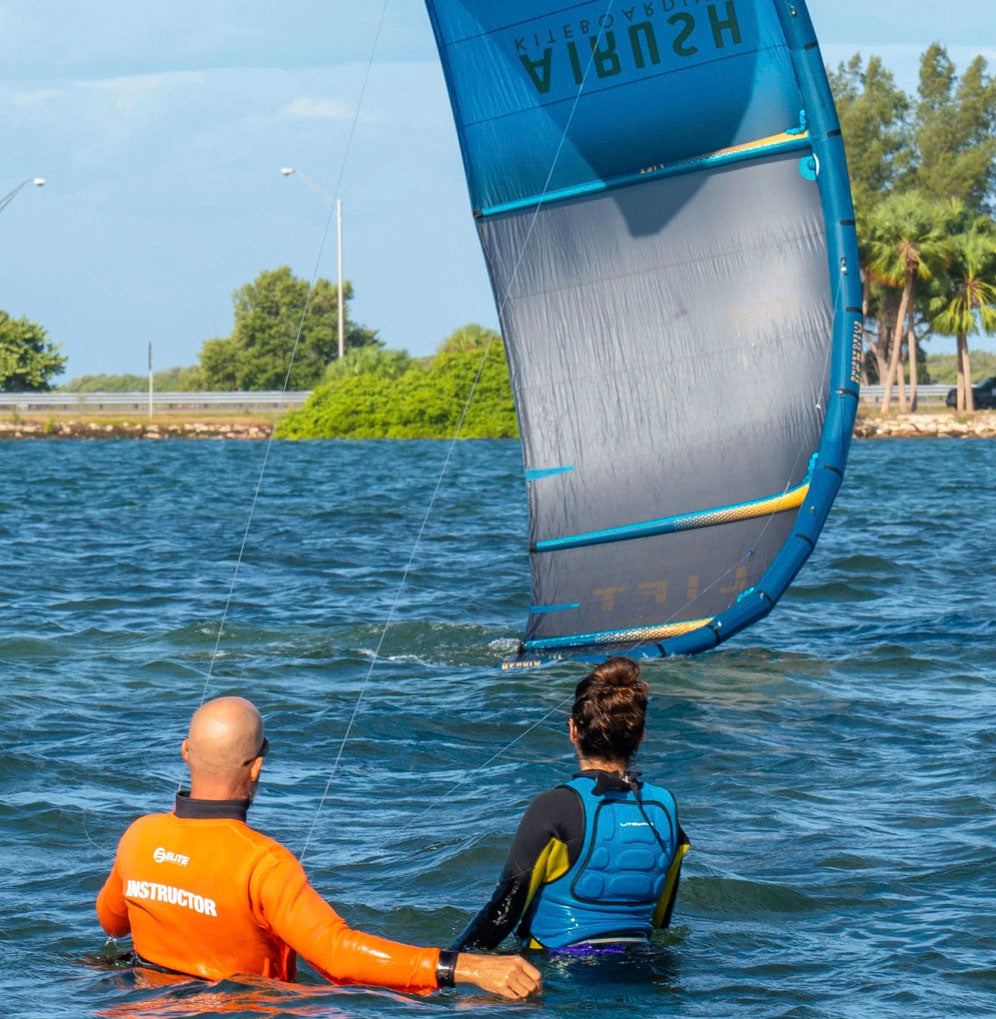
Elite Watersports has served the Tampa and St Petersburg area for years. They offer kiteboarding and wingsurfing lessons. They also have a retail shop equipt with the latest kitesurfing gear.
This is hands down the best location to learn kitesurfing. We have shallow, flat water and easy beginner conditions.
Call today and reserve your spot for jet-ski-supported lessons. If the wind is blowing, we're going!
If you need help give us a call. .
(727)-800-2202
Author

Ryan "Rygo" Goloversic
Rygo is a globally recognized kiteboarder, digital marketing expert and an advocate for wakestyle kiteboarding. When he's not writing articles, you can catch him competing on the KPLxGKA world tour or grinding it out in the gym.
Tags
Kiteboarding Florida Beaches
Want To learn more about kiteboarding?
Follow us to receive the latest update on our journey experience