
ELITE WATERSPORTS
Last updated 5-18-2025
How to Tack or Turn Around on a Kitefoil
Everything you need to know.

How to Tack or Turn Around on a Kitefoil
Struggling to change direction on your foilboard without wiping out? You’re not alone. Tacking on a kitefoil is one of the most technical skills in foiling—and also one of the most rewarding. In this guide, we’ll break down exactly how to tack, why it’s so difficult, and what you can do to finally land it consistently. Backed by real tips from Aaron, this is the most complete kitefoil tacking tutorial you’ll find.
This guide breaks down the essential components of a hydrofoil, explains their functions, and provides tuning tips to refine your setup. Whether you're a beginner looking for your first hydrofoil or an experienced rider optimizing performance, this breakdown will help you get the most out of your gear.
Table Of Contents
- What Is a Tack on a Kitefoil (vs. a Jibe?)
- Step 1: Master Your Foot Switch on Land
- Step 2: Learn the Kite Motion for a Smooth Tack
- Step 3: The Full Water Tack – Timing, Technique & Breakdown
- Step 4: Timing the Kite Loop (When You Need It)
- Step 5: Board Angle & Transition Mistakes to Avoid
- Final Tips for Learning to Tack on a Kite Foil
What Is a Tack on a Kitefoil (vs. a Jibe?)
A tack on a kitefoil is the maneuver where a rider changes direction by turning upwind—through the wind window—while transitioning both their kite and feet. Unlike a jibe, which involves carving downwind and is generally easier to learn, tacking requires you to maintain lift while shifting foot positions as the board flattens and the kite hovers overhead at 12 o’clock.
The essence of a kitefoil tack lies in subtlety and timing. You’re not doing a full 360. Instead, you're pivoting the board roughly 45 degrees through the wind, while maintaining enough forward motion and foil lift to keep from stalling mid-transition.
Tacking is a more advanced skill than jibing because it forces you to deal with the foil’s sensitivity, kite drift, and foot placement—all while moving upwind. But mastering it opens up a whole new world of control and versatility, especially in tight spots or when riding efficiently in light wind.

Quick Summary:
- Tack = upwind turn through the wind
- Jibe = downwind carve with the wind
- Tacking requires a foot switch + kite reposition
- It’s harder—but essential for advanced foil control
Why Tacking Is So Hard on a Kitefoil
If you’ve been struggling with tacking, you’re not alone. It’s one of the most challenging transitions in kitefoiling—and for good reason. Unlike jibing, where momentum and gravity work in your favor, a tack demands perfect control of the kite, board, and your body all at once.
So, why is tacking so hard on a foil? First, the balance point is unforgiving. If your foot placement is even slightly off, the foil becomes unstable and wants to roll. Second, the kite must be timed perfectly. Fly it too late and you stall. Too early, and you’ll lose lift mid-transition. Lastly, you need to switch your stance without disturbing the board’s trim. Most riders fall because they rush the footwork or forget to flatten the board before switching feet.
Aaron puts it plainly:
“Tacking is really tough, and you need a lot of power for it. Some people take years to learn this—but hopefully this tutorial shortens that learning curve so you can get it on the first day.”
Expect this skill to take weeks—or months—not days. But with the right drills and a little patience, you’ll get there.
Want help cutting through the frustration faster? Book a kitefoil lesson with Elite Watersports and get personalized coaching that accelerates your learning curve.
Step 1: Master Your Foot Switch on Land
Before you ever attempt a tack on the water, start by dialing in your footwork on land. Why? Because unstable foot placement is the number one reason riders fall mid-transition. Practicing on the beach builds the muscle memory you’ll need when everything is happening fast and under pressure.
Start in your usual riding stance. Let’s say you’re riding left foot forward. The goal is to smoothly bring your back (right) foot forward into the exact spot where your front foot was, while simultaneously shifting your front foot to the rear. It’s one fluid motion—and if it’s even slightly off, the foil will pitch or stall.
Aaron’s advice:
“If your foot placement is off, your foil will be unstable. Perfect the motion before hitting the water.”
Use a visual marker—like a line in the sand or your kite lines—to replicate your board stance. Repeat the movement until you can land that front foot precisely every time. Try it with your eyes closed or while looking away to test your consistency. And remember the “penguin stance”—when both feet are placed slightly inward, pointing toward each other. This neutral position helps stabilize the board mid-transition.
The better your footwork on land, the more confident—and balanced—you’ll be when it counts.


Step 2: Learn the Kite Motion for a Smooth Tack
If your kite isn’t in the right position, your tack will fall apart—no matter how clean your foot switch is. The kite sets the timing, creates the lift, and drives the turn. Most failed tacks trace back to one simple issue: the rider didn’t let the kite lead the transition.
The motion starts with flying the kite at 12 o’clock—but here’s the nuance: it should be done using your back hand only. This keeps the motion controlled and aligned with your direction of travel. As the kite rises, you’ll feel a subtle lift. That’s your cue to move. The lift helps unweight your feet, making the stance switch far easier and more stable.
Aaron explains it clearly:
“The kite tells you when to switch your feet. As soon as you feel that lift, both feet should come together. It’s all about your back hand driving the motion.”
This stage is about comfort and familiarity. Practice flying the kite to 12 with just your back hand—on the beach or in waist-deep water. Look upwind. Stay relaxed. The more control you have here, the less chaotic the transition will feel later.
Once you’re consistently getting that lift, you’re ready to bring it all together on the water.
Step 3: The Full Water Tack – Timing, Technique & Breakdown

Once you’ve nailed the footwork and kite control on land, it’s time to put it all together in the water. The key to a successful kitefoil tack is sequencing—each move builds on the last. Miss a step, and you’ll likely stall, fall, or get pulled off balance. Here’s the complete breakdown.
How to Tack on a Foilboard (Step-by-Step):
- Build Moderate Speed Heading Slightly Upwind
Start with enough forward momentum. You want to be edging gently—not aggressively—upwind. Too much angle and you’ll stall. Too little and you’ll lose the lift needed for your transition. - Fly the Kite to 12 o’clock Using Back Hand Only
Keep the kite stable and slow as it rises. Look upwind and stay relaxed. Don’t rush—wait for that subtle moment of lift before moving your feet. - Flatten the Board Before You Switch Feet
This is where many riders fail. If the board is still angled or carving when you switch, the foil will roll unpredictably. Flatten it first to create stability. - Step Into Penguin Stance (Back Foot Comes Forward)
Your back foot comes up into the spot your front foot was. Both feet should now be forward, slightly pointed inward. Think balance over speed. - Shift Front Foot to the Tail to Complete the Switch
Now move your original front foot back into your new riding stance. Stay centered. The board should remain flat during this motion. - Send the Kite Into the New Direction
Once you’re stable in your new stance, guide the kite forward toward your new heading. If you need extra pull, a gentle loop can help—but only after the switch is complete.
Aaron’s reminder:
“It’s not a full 360 turn. Most people go too far and fall. It’s really just a 45-degree change—get the board flat, feet switched, and the kite moving again.”
Take your time, and expect some failed attempts. Every tack teaches you something. Focus on refining one piece at a time—kite timing, board angle, or footwork—before trying to nail everything at once.
Looking to level up your transitions or add style to your next session? Check out our full Trick Tip Blog for tutorials, expert breakdowns, and progression strategies designed for riders at every level.
Step 4: Timing the Kite Loop (When You Need It)
Even when your technique is dialed, light wind conditions can throw a wrench in your tack. If you switch feet and the kite doesn’t generate enough pull to keep you moving, you risk stalling mid-transition. That’s where a well-timed kite loop can save the session.
The key is timing. Never initiate a loop while you’re switching feet. Instead, wait until you’ve completed the stance change, flattened the board, and stabilized your balance. Only then should you loop the kite gently in the new direction to generate the extra power you need to foil out of the turn.
Aaron breaks it down:
“Sometimes, after you’ve done the foot switch and start angling your board in the new direction, you may need a loop to keep riding. But that loop only works if your feet are planted and you’re already stable.”
Start small—this isn’t a megaloop. It’s a controlled, tight arc that helps you regain forward motion in low wind. If you loop too early or with too much aggression, you’ll end up off-balance and in the water.
Riding in marginal conditions? Make sure your setup is optimized for success. Explore our light wind gear collection to find kites, foils, and boards that make transitions like this easier—even when the wind barely shows up.

Step 5: Board Angle & Transition Mistakes to Avoid
If you keep falling during your tack, chances are it’s not just about footwork or kite position—it’s your board angle. One of the most common reasons riders struggle is that they rotate the board too much, too soon, or in the wrong direction. Tacking on a foil isn’t a full turn—it’s a subtle redirection.
Top Mistakes to Avoid During a Kitefoil Tack:
- Over-Turning the Board
This is the big one. You’re not carving a full circle. Aim for a 45-degree direction change—just enough to redirect through the wind without spinning out. - Switching Feet Too Early
Always flatten the board before initiating your foot switch. Trying to step while the board is still edged or turning increases the chance of foil instability. - Losing Wind on the Top of the Board
As you turn, make sure the wind stays on the deck, not under it. If the wind catches underneath, the board becomes unstable and lifts unevenly. - Under-Edging or Over-Edging Into the Turn
You want a gentle, deliberate entry. Too little edge and you won’t have directional control. Too much, and you stall before you ever get around.
Aaron’s insight:
“I see this all the time—people rotate the board way too far thinking they need a big turn. But it’s really just a clean, slight pivot. Flatten it, switch, and go.”
Clean transitions come down to subtlety. The board, kite, and rider should all move as one—no jerky movements, no overcorrections. Nail the angle, and the rest gets a lot easier.


Final Tips for Learning to Tack on a Kite Foil
Tacking on a foil isn’t about brute force or luck—it’s about refining small details through repetition. Even advanced riders fall when their timing or balance is just slightly off. The good news? Each failed attempt brings you one step closer to getting it right.
Here are a few final tips to help shorten the learning curve:
- Drill Your Footwork on Land First
Don’t skip this. Repeating the switch on the beach until it's automatic will save you dozens of frustrating water sessions. - Use Light Wind Days to Practice Parts, Not Full Tacks
When it’s barely rideable, focus on foot placement and kite timing—not completing the turn. Isolate each part of the tack and master it on its own. - Don’t Rush the Transition
The more deliberate your movements, the more stable the foil will feel. Make small, precise adjustments instead of rushing to get through it. - Ride Gear That Matches Your Progression
Not all foils and kites are created equal. Some setups are more forgiving than others, especially in transitions. If your gear is fighting you, it might be time for a change. Explore our curated foil board collection to find setups that make learning smoother and more stable. - Take a Lesson to Accelerate Your Progress
Nothing replaces real-time feedback from an experienced coach. A single session can correct bad habits before they stick.
Want more insights like this? Browse our Trick Tip Blog for progression advice, how-tos, and real-world tips that go beyond the basics.
Still Struggling? Book a Lesson With Elite Watersports
Watching tutorials, reading tips, and drilling on your own can take you far—but when it comes to tacking on a kitefoil, nothing beats personalized feedback. One session with an experienced coach can highlight the small adjustments you didn’t even know you were missing.
At Elite Watersports, we’ve helped hundreds of riders—from first-time foilers to seasoned kiters—crack the tack with real-time guidance and proven progressions. Whether you’re stuck on footwork, kite control, or board balance, we’ll break it down, simplify the process, and help you build confidence fast.
Aaron says it best:
“Watching videos helps—but it’s not the same as live feedback. When we can see what you’re doing in the moment, we can help you correct it instantly.”
Ready to finally nail your tack and unlock the next level of kitefoiling? Book a private lesson with Elite Watersports and get hands-on coaching that accelerates your progress—safely, efficiently, and with expert support every step of the way.
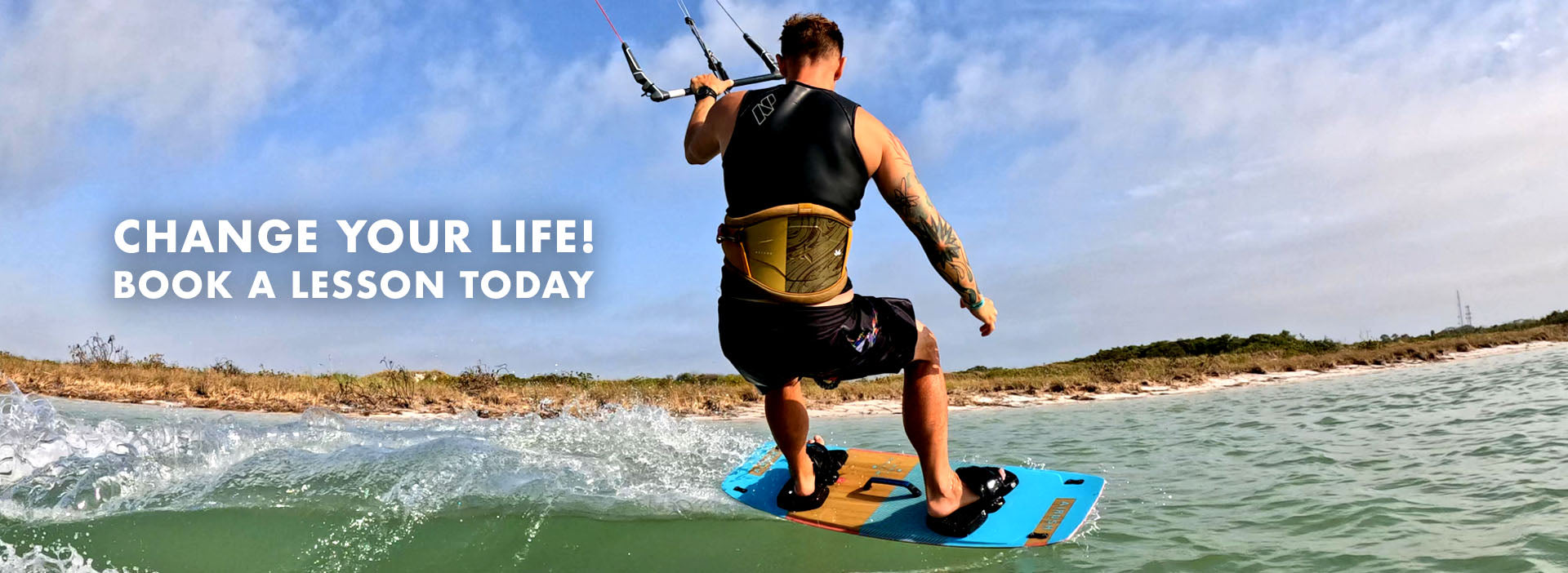
Where to take kiteboarding lessons in Florida.
 Reserve A Lesson
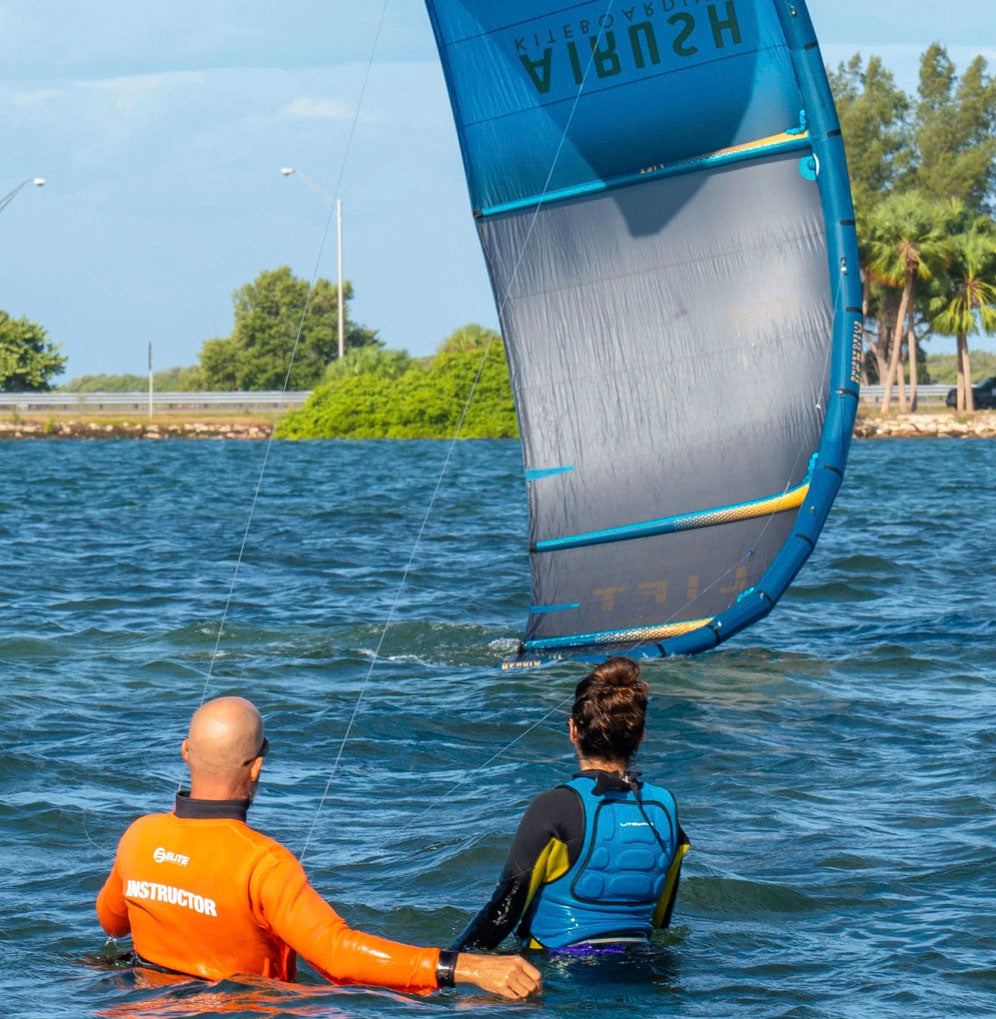
The nearest kiteboarding shop and kite school that services Dunedin and Clearwater is Elite Watersports located in St Petersburg. Give us a call and we can get you up and riding in no time. We teach kitesurfing lessons at Skyway beach a short drive south of Dunedin. Our condions are also beginner friendly and perfect for learning.
Call us for more info on kiteboarding in Florida.
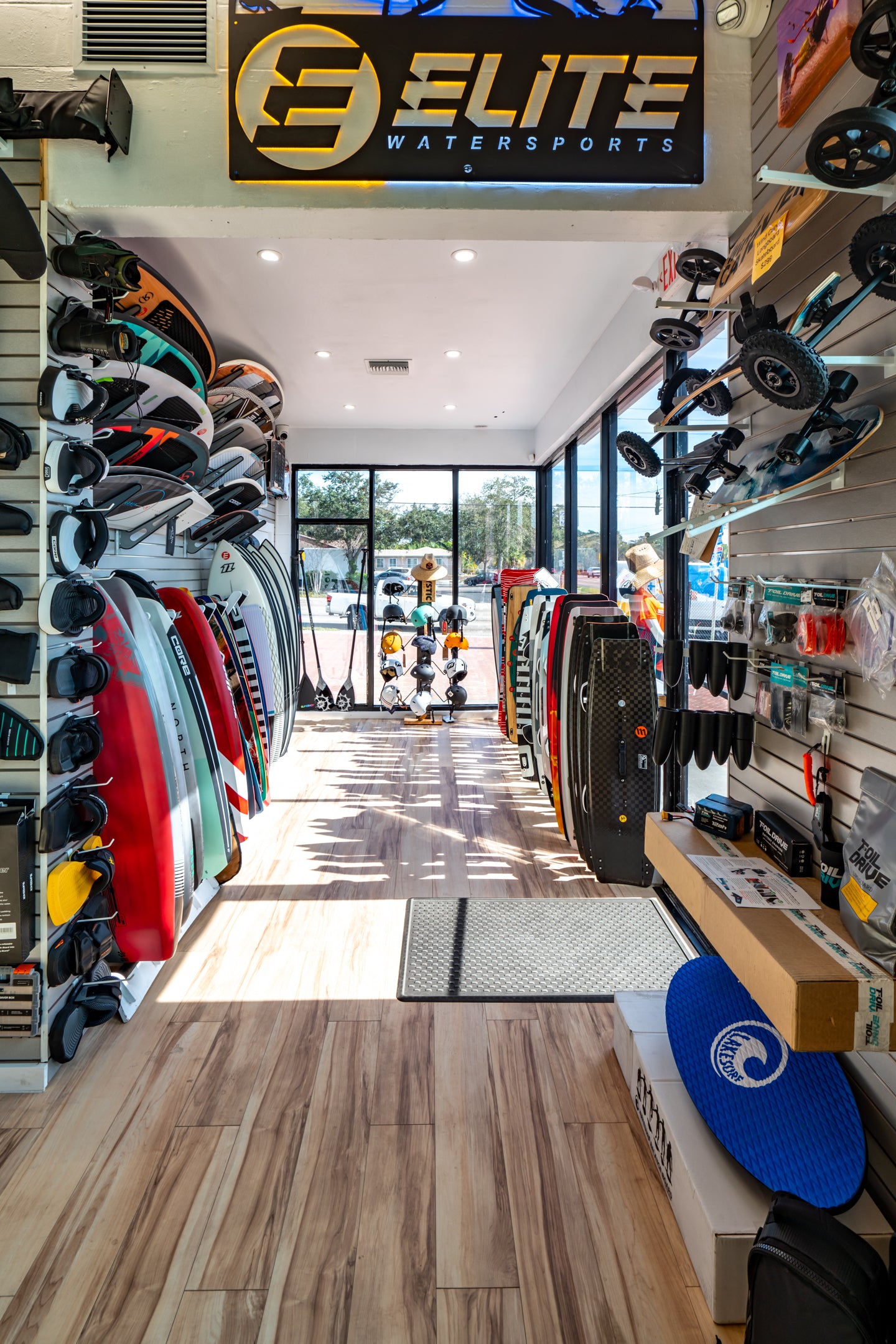
Elite Watersports has served the Tampa and St Petersburg area for years. They offer kiteboarding and wingsurfing lessons. They also have a retail shop equpit with all of the latest kitesurfing gear.
If you need help give us a call. .
(727)-800-2202
Author

Ryan "Rygo" Goloversic
Rygo is a globally recognized kiteboarder, Airush team rider and an advocate for wakestyle kiteboarding. When he's not writing articles or producing kite videos you can catch him competing on the KPLxGKA world tour or grinding it out in the gym
Tags
Kiteboarding electric pump
Want To learn more about kiteboarding?
Follow us to receive the latest update on our journey experience