
ELITE WATERSPORTS
Last updated 5-05-2025
How to Practice Kiteboarding Alone Safely

How to Practice Kiteboarding Alone Safely (Get Away from the Beach and Build Confidence)
Practicing kiteboarding on your own can be one of the most rewarding steps in your progression — but only if you’re prepared. Solo sessions offer space, focus, and freedom, but they also require more discipline and decision-making than riding with help on the beach.
Too many riders stay stuck in chaotic beach zones, trying to manage their kite around crowds, or struggling to ride without a plan. The truth is, you’ll improve faster — and safer — by getting away from the shoreline and building confidence with real-world solo techniques.
In this guide, you’ll learn how to walk out, launch clean, fly smart, and reset like a pro. Whether you're just stepping into solo sessions or looking to refine your skills, these tips will help you ride with more control, less stress, and total confidence.
“At Elite Watersports, my goal is simple: build confident, capable riders who can practice and enjoy kiteboarding anywhere safely — even solo.” – Aaron


Table Of Contents
- When Are You Ready to Practice Kiteboarding on Your Own?
- Why You Must Get Away from the Beach When Practicing
- How to Practice Body Dragging and One-Handed Kite Control Alone
- How to Rest or Reset by Landing Your Kite in the Water
- How to Rest or Reset by Landing Your Kite in the Water
- Why Ejecting Your Kite Is a Smart Tool (Not Just for Emergencies)
- Recap: Your First Self-Sufficient Kiteboarding Sessions
When Are You Ready to Practice Kiteboarding on Your Own?
Practicing kiteboarding alone is a big step — and it shouldn't be rushed. Before you even think about heading out solo, you need a strong foundation. That means a few solid lessons from a certified instructor, not just self-teaching from YouTube or watching others on the beach.
According to Aaron, this step is non-negotiable:
“Don’t rush this. Make sure you’ve had a few proper lessons first — your life depends on it.”
Lessons give you the baseline skills you’ll need to handle real-life challenges when you're out there on your own — things like relaunching your kite, walking upwind efficiently, recovering from crashes, and initiating a safe self-rescue.
Here are the essentials you should confidently know before going solo:
- How to launch and land safely (with or without help)
- How to self-rescue and pack down your gear in open water
- One-handed kite control while walking or body dragging
- How to identify safe practice zones and avoid "the highway" (the crowded rider zone near shore)
If you can’t check off all of those boxes, it’s not time to go out alone yet — and that’s okay. Focus on building your core skills under supervision so you can eventually practice without worry, panic, or risk to others around you.
Why You Must Get Away from the Beach When Practicing
One of the biggest mistakes riders make — especially early on — is trying to learn everything right at the shoreline. The beach might seem like the safe zone, but it’s actually the most chaotic, intimidating, and risky part of the session.
There are crowds of people, tight launch areas, other kiters flying by, and tons of distractions. On a busy day, you’re not just managing your kite — you’re dodging people, dogs, and beach chairs
“The beach is the most intimidating and dangerous part. Get 100+ yards offshore — you'll be safer and have way more fun.”
When you move away from the shoreline:
- You give yourself more space to practice body dragging and kite control
- You reduce the risk of accidentally launching into or crashing onto someone
- You get out of the “highway” — that busy zone right in front of the launch where other riders are looping, boosting, or zipping by
Out there, it’s just you and the wind. You can focus, stay calm, and work on your goals without pressure. You’ll have more success, fewer mishaps, and much more confidence — all by taking that extra walk out.
How to Walk Out Safely Before Launching Your Kite
If you’re going to practice kiteboarding alone, how you start the session matters just as much as the riding itself. One of the smartest things you can do? Walk out into waist-deep water before launching your kite.
This single step can prevent most of the common mishaps beginners face during setup.
“The further you walk out, the more successful you’ll be.”
Here’s how to do it right:
1. Leave the Board on the Beach (At First)
You don’t need your board for initial kite drills — and it’ll just get in the way during your setup. Especially on early solo sessions, focus on kite control first.
2. Pre-Rig and Wrap Your Bar
Make sure your lines are untangled and the bar is wrapped cleanly before walking out. This helps prevent spaghetti situations once you’re in the water.
3. Walk with the Kite Flipped (Leading Edge Up)
Hold the kite leading edge into the wind. As you wade out, the kite can trail behind you safely — ready for drift launch setup.
4. Let Lines Out as You Walk
As you walk backwards, begin slowly unrolling the bar and letting lines out — always keeping tension. Tension keeps the lines straight and untangled. The moment you let slack pile up, you’re asking for a tangled mess.
Walking out methodically does more than just reduce risk — it sets you up mentally for the session ahead. You’ll feel more in control, less rushed, and more capable of handling whatever comes next.

How to Set Up for a Drift Launch Like a Pro
Drift launching is one of the most important skills for solo kiteboarders. It lets you launch your kite in deep water — away from the beach — without needing a helper. But doing it safely takes precision and patience.
“Master drift launching before you practice solo — it’s a critical safety skill.” – Aaron
Here’s the step-by-step breakdown:
1. Prep Everything on the Beach First
Make sure your kite is rigged correctly and your lines are clean. Walk your bar down to the kite, wrap it tightly, and double-check for tangles before heading into the water.
2. Walk Out with the Kite and Bar
Carry your kite (leading edge up) and bar into waist-deep water. Once you're out far enough — at least 100 yards from the beach — flip the kite and start slowly walking backward.
As you walk, let the lines out with steady tension. Keep moving to avoid slack — tension is what prevents knots and tangles.
3. Hook In and Secure Everything
Once your lines are fully out, hook in your chicken loop, attach your leash, and double-check that everything’s locked and secure. Be calm and methodical — this is the last checkpoint before launch.
4. Orient the Kite and Let It Drift
Gently guide the kite downwind, orienting it to the side you want to launch from. Watch carefully for any line wraps. If something looks off, don’t force it — reset or eject and start over.
The beauty of the drift launch is that it gives you total control, especially in open space. You’re not relying on crowded beaches or sketchy assists. You’re running the show.
How to Practice Body Dragging and One-Handed Kite Control Alone
You don’t need your board to make real progress. In fact, some of the most valuable solo sessions come from leaving the board on the beach and spending time mastering your kite — especially through body dragging and one-handed control.
“You don’t need your board right away. Flying your kite perfectly is the real skill you need to master.” – Aaron
Why body dragging is the ultimate solo drill:
- It builds confidence without the pressure to ride
- It teaches you how to control the kite while moving through the water
- It’s how you’ll recover your board when you’re ready for deep water sessions
Start with two-handed body drags. Practice:
- Keeping the kite parked at 1 or 2 o’clock
- Controlling speed and direction by adjusting bar pressure
- Staying flat and streamlined in the water
Then, move on to one-handed control — a critical skill for self-rescue, board retrieval, and transitions. Work on flying the kite while your front arm extends forward like Superman. Adjust power with subtle wrist movements, thumb leverage, or elbow position.
These solo sessions are where true kiteboarders are made. You’re building muscle memory, refining instincts, and learning how to handle your kite like a pro — all without ever putting your foot in a strap.

How to Rest or Reset by Landing Your Kite in the Water
Practicing alone doesn’t mean pushing nonstop. One of the smartest things you can do during a solo session? Land your kite in the water to take a break — without ending your session.
“Landing your kite in the water is a secret weapon — use it to conserve energy and stay focused.” – Aaron
When you’re 100+ yards offshore and need to reset your harness, catch your breath, or simply regroup, the last thing you want is to burn energy trying to hold position.
Here’s how to do it:
1. Steer the Kite to the Edge of the Wind Window
Let the kite glide gently to either 3 or 9 o’clock. It should settle on the water — canopy down, leading edge up. Most modern kites will sit there calmly in light to moderate wind.
2. Use the Pause Wisely
This is your chance to:
- This is your chance to:
- Untangle your bar
- Take a few deep breaths
- Hydrate if needed
Your kite stays parked, and you stay in control — no drama, no relaunch stress.
3. Resume When Ready
Once you're reset, guide the kite back into relaunch position and continue your session. If it drifts slightly, no big deal — just reposition and go.This tactic conserves energy and turns frustration into strategy. Especially when you’re practicing alone, knowing when and how to pause keeps your session safe, productive, and sustainable.


How to Walk Upwind Without Wearing Yourself Out
If you’re new to practicing solo, one of the most exhausting parts isn’t the riding — it’s the constant upwind battle. Trying to walk while flying your kite fully powered, holding your board, and balancing in the water? It adds up fast.
But there’s a smarter way.
“Use your tools smart — land, walk, reset. Save your energy for your real session.” – Aaron
Here’s how to conserve energy and stay in control:
1. Land the Kite in the Water First
Before attempting to walk upwind, steer the kite to the edge of the wind window and land it calmly on the water. This removes all pull from the lines and gives you freedom to move without resistance.
2. Walk Without Fighting the Kite
Once the kite is resting, start walking upwind. The kite will drift along with you, staying safe and stable on the water. No tension, no drag, and no wasted energy.
3. Reset and Relaunch
When you’ve gained the ground you need, simply reposition, hook back in, and relaunch. No need to re-do your whole drift launch unless something’s changed dramatically.This approach is a game-changer for solo sessions. It turns walking into a reset tactic — not a punishment. You stay fresh, focused, and in control.
Why Ejecting Your Kite Is a Smart Tool (Not Just for Emergencies)
Most riders think of the eject as a last-resort emergency button. It’s there for wipeouts, panic moments, or dangerous situations — right?
Not exactly.
“Your eject is a tool, not just an emergency button. Use it strategically to control your session.” – Aaron
Knowing how — and when — to eject calmly and on purpose can make your solo sessions smoother, safer, and far less exhausting.
Here’s when ejecting makes sense:
- You need to reset everything after a tangle or mislaunch
- The kite’s pulling too hard and you’re not in position
- You want to land and walk upwind without resistance
- You’re close to shore and don’t want to ride into beach chaos
The kite usually tumbles to the edge of the window. From there, you can:
- Walk to a safe distance
- Reconnect your bar and lines
- Relaunch cleanly when ready
It’s not a failure — it’s a reset.
The more you practice using the eject as a tool, the more comfortable you’ll be under pressure. It becomes part of your flow, not just a panic option.
And in solo sessions, that kind of confidence makes all the difference.
How to Self-Rescue Back to the Beach Like a Pro
No matter how well your solo session is going, you’ll eventually need to get back to shore. But landing in a crowded beach zone or hoping someone’s there to catch your kite isn’t always the best move — especially if conditions change or the beach is packed.
That’s where the self-rescue comes in.
“Always look like a pro — better to self-rescue and walk in clean than crash your kite on a crowded beach.” – Aaron
When to Self-Rescue:
- You’re near a busy beach and don’t want to land in chaos
- You’re tired and don’t feel like relaunching
- You’ve drifted too far downwind to walk your gear up safely
How to Do It:
- Eject the kite and let it settle at the edge of the wind window
- Wind your lines methodically as you move toward the kite
- Grab the leading edge, flip the kite upside down, and hug the strut
- Use the kite like a sail to help drift toward shore, or just swim in calmly
No panic. No stress. Just a clean, professional exit.
You don’t need to be perfectly upwind to end your session the right way. Knowing how to self-rescue gives you independence — and it’s what separates the weekend warrior from the self-sufficient rider.
How to Conserve Energy and Stay Safe as a Beginner Kiteboarder
Solo sessions can be incredibly rewarding — but they can also wear you down fast if you don’t pace yourself. Wind, sun, water, and adrenaline all add up. That’s why learning to manage your energy and ride smart is just as important as learning to ride at all.
“Flying the kite well IS the session. You don’t need a board under your feet every time to get better.” – Aaron
Focus on control, not mileage
You don’t need to ride for hours or log miles to make progress. A focused 30-minute session practicing drift launches, body drags, and relaunches can be more valuable than a two-hour struggle to stay upwind.
Know when to rest
If you're tired, land the kite in the water and take a break. Adjust your harness, hydrate, reset your goals. You’ll ride better — and safer — if you stay sharp.
Don’t force the board every time
If the wind is inconsistent or you're still working on confidence, leave the board on shore. Focus on precision kite control, body positioning, and transitions. That’s what builds true independence.
Kiteboarding is a high-performance sport, but learning it well means managing your limits, not pushing them recklessly. Use your energy wisely, and every session will take you further.

Recap: Your First Self-Sufficient Kiteboarding Sessions
Practicing kiteboarding alone is one of the most empowering steps you can take but it requires patience, preparation, and a clear plan.Here’s the formula to keep you safe and progressing:
Here’s the formula to keep you safe and progressing:
- Walk deep before launching. Avoid crowded beaches and give yourself the space to focus.
- Drift launch with control. Master this skill before going solo — it’s your launchpad for independence.
- Leave the board behind at first. Perfect your kite skills before worrying about riding.
- Body drag, fly one-handed, and reset calmly. These are the core skills you’ll use every time.
- Land your kite in the water when needed. It’s not quitting — it’s smart energy management.
- Use your eject system confidently. It’s a reset button, not a panic move.
- Self-rescue back to shore. Stay calm, clean, and in control — always.
“Build your skills one session at a time. Confidence comes faster when you practice smart, not hard.” – Aaron
You don’t need perfect conditions, a fancy setup, or someone watching your every move. You just need the right mindset, the right habits, and the willingness to treat every solo session as a learning opportunity.


Build Real Kiteboarding Skills with Elite Watersports
Whether you’re just starting to fly solo or refining advanced skills, Elite Watersports is here to guide your progression every step of the way.
We offer advanced lessons for riders who want to master solo techniques like drift launching, self-rescue, and deep water confidence. Our goal is to help you become a strong, self-sufficient rider — no matter where you ride or who’s around.
Want to practice solo safely? Start here:
- How Do I Attach Lines to a Kiteboarding Kite?
- How Do I Fly a Kiteboarding Kite?
- How Do I Recover My Kiteboard After I Fall?
Ready to ride with us in St. Petersburg?
Ready to ride with us in St. Petersburg?Book your next lesson or reach out to our team — we’re here to help you progress smart, not hard.
“Elite Watersports is here to make you a strong, confident, independent kiteboarder — no matter where you ride.” – Aaron
Where to take kiteboarding lessons in Florida.
 Reserve A Lesson
The nearest kiteboarding shop and kite school that services Dunedin and Clearwater is Elite Watersports located in St Petersburg. Give us a call and we can get you up and riding in no time. We teach kitesurfing lessons at Skyway beach a short drive south of Dunedin. Our condions are also beginner friendly and perfect for learning.
Call us for more info on kiteboarding in Florida.
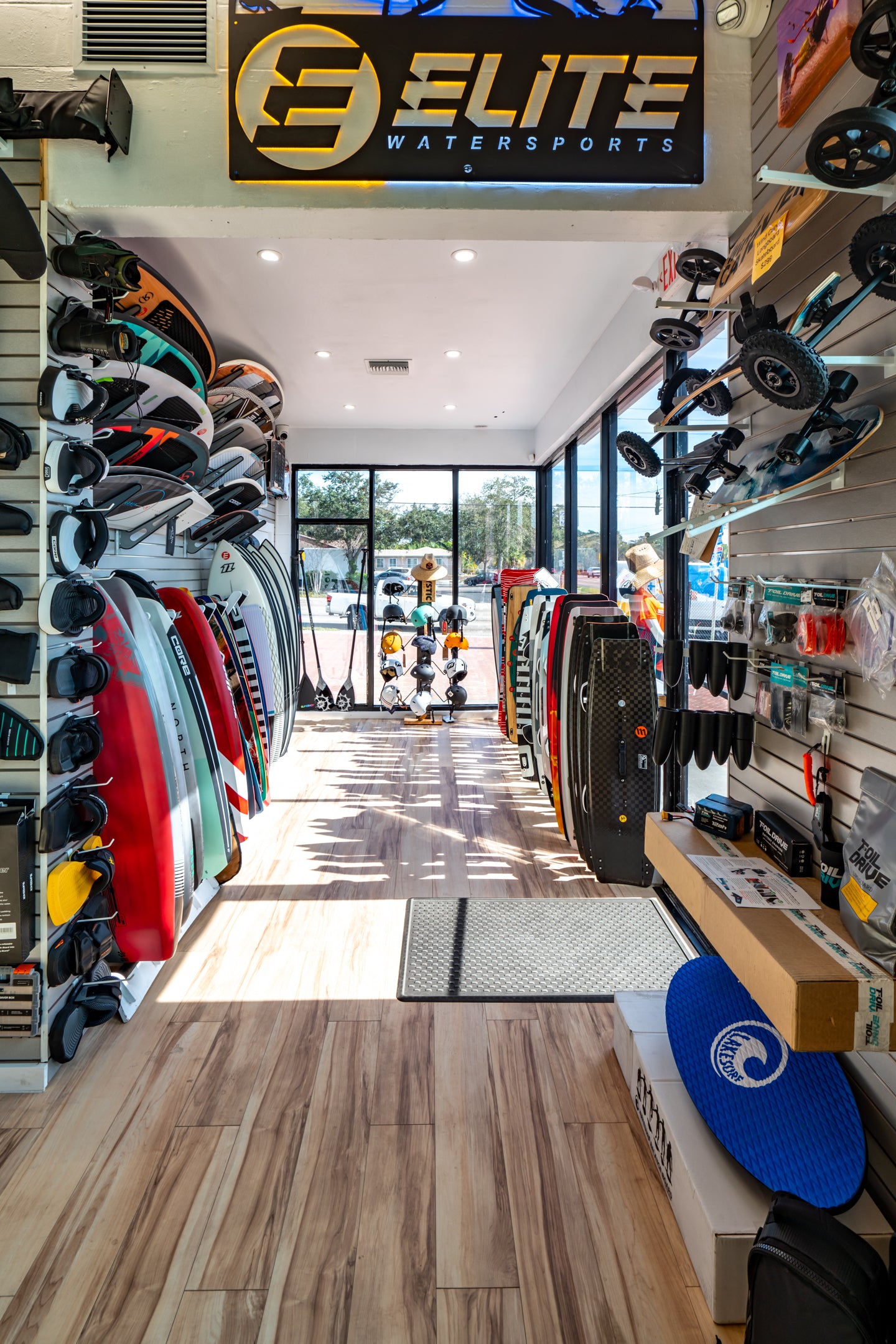
Elite Watersports has served the Tampa and St Petersburg area for years. They offer kiteboarding and wingsurfing lessons. They also have a retail shop equpit with all of the latest kitesurfing gear.
If you need help give us a call. .
(727)-800-2202
Author

Ryan "Rygo" Goloversic
Rygo is a globally recognized kiteboarder, Airush team rider and an advocate for wakestyle kiteboarding. When he's not writing articles or producing kite videos you can catch him competing on the KPLxGKA world tour or grinding it out in the gym
Tags
Kiteboarding self Rescue
Want To learn more about kiteboarding?
Follow us to receive the latest update on our journey experience